The honest answer is more nuanced than most steaming guides admit. Steam can do some things well. It cannot do others at all. This guide covers both: the science behind how steam interacts with fabric odors, which odor types respond to it, which don't, and what to reach for when steam falls short.
Key Takeaways
- Steam freshens lightly musty or mildly smoke-affected garments but cannot eliminate sweat, pet, or deeply embedded odors
- Steam applies heat and moisture to the surface; it contains no deodorizing agent that chemically neutralizes odor molecules
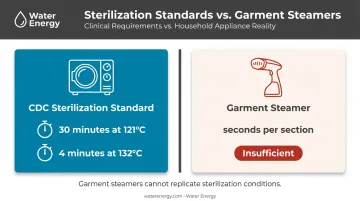
- CDC steam sterilization guidelines require 4–30 minutes of sustained exposure — a garment steamer passes each area in seconds
- Suede, leather, waxed fabrics, and heat-sensitive embellishments should never be steamed
- For persistent odors, washing with an oxidizing system — such as ozone laundry — eliminates the odor source rather than masking it
How Steam Actually Affects Odors in Clothes
Steam does two things to fabric: it relaxes fibers and introduces temporary heat and moisture at the surface. For certain odors, that combination is enough to make a real difference. For others — particularly stubborn or deep-set smells — it barely touches the problem.
What Steam Can Do
When you run a steamer over a garment, heat increases the volatility of loosely-bound odor molecules sitting near the fiber surface. Those molecules — particularly from light mustiness or recent environmental exposure — can disperse into the surrounding air, especially if you hang the garment in a well-ventilated space afterward.
This is what "freshening" means in practice: the smell is less noticeable because some of the volatile compounds have escaped into the air, not because the odor source has been eliminated.
What Steam Cannot Do
Steam is not a deodorizing agent. Unlike detergent or ozone, it contains nothing that chemically neutralizes odor-causing compounds. It applies heat and moisture temporarily, then stops.
The bacteria angle is often misunderstood. Steam does have sterilizing properties — but only under specific, controlled conditions. According to CDC steam sterilization guidelines, textile-pack sterilization requires 30 minutes at 121°C or 4 minutes at 132°C in a controlled sterilizer chamber. A garment steamer passes each section of fabric in seconds, at a lower and inconsistent temperature — nowhere close to a sterilization cycle.
Freshening vs. Deodorizing
The distinction matters:
- Freshening = volatile odor molecules disperse temporarily; the garment smells less stale
- Deodorizing = the underlying odor source (bacteria, organic compounds, embedded residues) is removed or destroyed
Steaming does the first. Washing does the second.
Steam works best on mild, surface-level, recently acquired odors. As odors become stronger, sink deeper into fibers, or root themselves in bacterial activity, steaming becomes progressively less capable of addressing the actual source.
What Types of Odors Can Steaming Remove (and What It Can't)?
Not all odors behave the same way in fabric, and steam's effectiveness depends entirely on how the odor got there and where it's sitting.
Odors Steaming Works Best On
Musty smells from storage form when volatile organic compounds settle loosely near the fiber surface. Heat and airflow after steaming can drive many of these molecules out, making it a reasonable first step for a jacket that's been in a wardrobe for months.
Structured garments like blazers and sport coats that can't go in the washing machine frequently pick up ambient smoke or cooking smells. If the exposure was brief and superficial, steaming followed by thorough airing can reduce the odor noticeably.
Odors Steaming Struggles to Remove
Sweat and body odor consistently defeat steaming. Fresh sweat is largely odorless; the smell develops when skin bacteria (Staphylococcus, Corynebacterium) metabolize gland secretions into volatile fatty acids and thioalcohols. Research published in PMC's textile malodor literature confirms these compounds embed deep within fiber structures, with polyester retaining them especially tenaciously.
Steam's brief surface exposure cannot kill sufficient bacteria or extract the underlying protein compounds — so the odor returns once the garment warms back up.
Pet odors and deeply embedded smoke bond chemically to fabric fibers. Breaking that bond requires either a surfactant (detergent) to physically lift the compounds out or an oxidizer to chemically destroy them. Steam heat alone achieves neither.
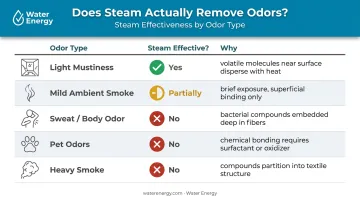
| Odor Type | Steam Effective? | Why |
|---|---|---|
| Light mustiness | Yes | Volatile molecules near surface disperse with heat |
| Mild ambient smoke | Partially | Brief exposure; superficial binding only |
| Sweat/body odor | No | Bacterial compounds embedded deep in fibers |
| Pet odors | No | Chemical bonding requires surfactant or oxidizer |
| Heavy smoke | No | Compounds partition into textile structure |
How to Steam Clothes for the Best Odor-Removal Results
Technique matters more than most people realize. Done correctly, steaming lifts surface odors and freshens fabric effectively. Done poorly, it can make things worse.
Before You Steam
Only steam garments that are already clean. If a garment has visible stains or heavy soiling, spot-treat first — steam can set stains deeper into fibers and effectively lock in odors that might otherwise lift during a wash.
Technique: Distance and Movement
- Hold the steamer nozzle a few inches from the fabric — close enough to deliver heat without saturating the textile
- Move continuously; don't hold the steamer in one spot, which risks over-wetting or heat damage on delicate fabrics
- Make multiple slow passes over odor-prone zones rather than one fast sweep
Target Odor-Prone Zones
Focus deliberately on where odors concentrate:
- Collars and necklines
- Underarms and cuffs
- Interior linings on structured garments
Always Air Out After Steaming
After steaming, hang the garment in a well-ventilated space for at least 15 minutes — garment care experts recommend this drying interval before storing or wearing. Skipping this step traps residual moisture in the fiber, which can actually worsen musty smells over time.
What Clothes Shouldn't Be Steamed?
Steam is not universally safe. Check care labels before steaming anything, and know the categories that carry real risk:
Fabrics to avoid entirely:
- Suede and leather — steam causes warping, staining, and permanent finish damage
- Waxed fabrics (waxed cotton, oilskin) — steam strips the water-resistant coating
- Garments with plastic buttons, sequins, or iron-on patches — heat can warp or loosen heat-sensitive embellishments
- Vinyl or coated synthetics — steam degrades protective finishes
Structured garments require a lighter touch: Blazers with padded shoulders and tailored jackets with inner canvas can lose their shape when moisture penetrates the inner layers. Hold the steamer farther away and limit passes over the same area.
Care label rules override everything: ISO 3758:2023 introduced a specific "ironing without steam" symbol — a garment cleared for ironing may still not tolerate steam. If you see a crossed-out iron or a no-steam indicator, skip the steamer regardless of fabric type.
When Steaming Isn't Enough: Better Solutions for Stubborn Odors
If a garment has visible sweat stains, strong pet odor, heavy smoke saturation, or has been worn multiple times without washing, steaming will not resolve the problem. At that point, washing is the necessary step.
Steaming vs. Washing: What's the Real Difference?
Washing physically removes odor-causing bacteria, body oils, dirt, and chemical compounds from fibers through the combined action of detergent, water agitation, and rinsing. A peer-reviewed laundry hygiene review describes laundering as functionally removing bodily fluids and contamination through the combined effects of water, detergent, mechanical action, temperature, and rinsing. Steaming applies temporary surface heat only — there is no rinse stream to carry extracted material away.
For garments with persistent odors that survive regular washing, odor-causing compounds are typically embedded too deeply for standard detergent to extract fully. That's where a different chemistry is needed.
Where Ozone Laundry Comes In
Ozone (O₃) works differently from both steam and conventional detergent. As a powerful oxidizer, it chemically breaks down odor-causing bacteria, volatile organic compounds, and other organic molecules, destroying the odor source rather than masking it.
Water Energy's Storm ozone laundry system brings this approach to residential laundry, delivering dissolved ozone directly into your existing washing machine during each cycle.
The technology traces back to Water Energy's work with NASA in the 1990s, where engineers developed the TecH2Ozone process to clean Space Shuttle Solid Rocket Booster parachutes without generating toxic wastewater. That project demanded complete chemical elimination of contaminants, not surface freshening — a standard the Storm carries into home laundry today.
The Storm is particularly effective for:
- Pet owners washing dog beds: customer Kim H. from Pittsburgh reports they "keep smelling like new" — no detergent needed
- Athletes dealing with sports gear odor: customer Jamie W. from Plano, TX confirmed baseball uniforms come out with "no smells after they are dried"
- Hunters and outdoor enthusiasts who need complete scent elimination, not just freshening
- Anyone dealing with musty or sour laundry: the Anti-Sour benefit destroys mold spores during the cycle, stopping that damp-laundry smell before it starts
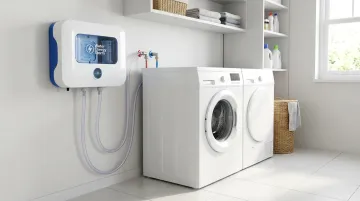
The Storm operates in cold water only, installs in about 30 minutes, and requires no maintenance — nothing to add, clean, or replace. At $399, it's a permanent laundry upgrade rather than a consumable workaround.
Frequently Asked Questions
Is steaming clothes as good as washing them?
No. Washing physically removes bacteria, oils, sweat residue, and soil from fibers using detergent, water agitation, and rinsing. Steaming applies temporary surface heat with no extraction mechanism — it's only useful for lightly worn garments with mild, surface-level freshness issues.
What clothes shouldn't be steamed?
Avoid steaming suede, leather, waxed fabrics, vinyl finishes, and any garment with plastic buttons, sequins, or iron-on embellishments. Always check care labels first — if a garment displays a "dry clean only," "do not iron," or "iron without steam" symbol, skip the steamer entirely.
Does steaming clothes kill bacteria and germs?
Steam has sterilizing properties, but only at sustained exposures garment steamers cannot deliver. CDC guidelines require 4–30 minutes in a controlled sterilizer to achieve textile sterilization. A garment steamer passes each section in seconds, which is not long enough to meaningfully reduce bacteria or eliminate the odor compounds they produce.
How long should you steam clothes to remove odors?
For mild musty odors, making 2–3 slow passes over the affected area followed by at least 15 minutes of airing out in a ventilated space is generally sufficient. For stronger odors — sweat, pet, or heavy smoke — additional steaming time won't help. These odors require washing, not longer steaming.
Can steaming remove sweat smell or pet odors from clothes?
Steaming won't remove sweat or pet odors. Sweat odor comes from bacterial metabolites embedded in fabric fibers; pet odors bond chemically to textile structures. Both require either detergent to lift the compounds out or an oxidizing agent like ozone to chemically destroy them. Heat and moisture alone cannot break these bonds.