The risks of doing it wrong go beyond ruined towels. According to NFPA data, an average of 900 home fires per year involve oily rags catching fire — and improper drying is one of the most common triggers. That's not a hypothetical.
This guide covers the full process: pretreatment, washing, detergent and temperature choices, safe drying, common mistakes, and when a towel is beyond saving.
Key Takeaways
- Pretreat before washing: soak in hot water with a degreaser for results no wash cycle can match alone
- Use heavy-duty liquid detergent; skip fabric softener entirely
- Never machine dry oil-soaked towels unless you're certain the wash removed all residue
- Wash shop towels separately — oils transfer to clothing in a shared load
- Replace towels that stay stiff after washing or repel water instead of absorbing it
Why Proper Care of Shop Towels Matters
Shop towels are built for reuse, but that only holds if you wash them correctly. Residue left in the fibers after an incomplete wash cycle reduces absorbency and redeposits contaminants onto whatever surface you're cleaning next.
The Fire Risk Is Real
Improperly handled oily rags are a documented cause of spontaneous combustion. The NFPA reports an average of 1,700 home fires per year from spontaneous combustion or chemical reaction, and a 2023 National Park Service alert documented seven incidents in two years tied to improperly laundered or stored grease-soaked towels.
Documented incidents include:
- Washed and dried towels that began smoking after being folded and stored
- Temperatures of 300–400°F recorded inside a milk crate of oil-soaked rags before ignition
- Multiple commercial-setting fires traced to improper storage after laundering
OSHA regulation 29 CFR 1910.106(e)(9)(iii) requires combustible rags to be stored in covered metal receptacles and disposed of daily in covered operations.
The Environmental and Cost Angle
Properly laundered shop towels that last longer mean fewer replacements and less textile waste. When towels are contaminated with certain chemicals, they can't go in standard trash — they require regulated disposal. Washing them correctly keeps them in rotation and out of the waste stream.
How to Wash Shop Towels: Step-by-Step
This is a three-phase process: sort, pretreat, wash. Skipping a phase doesn't save time. It shifts the problem to the next cycle or leaves you with a towel you'll need to replace.
Sort and Inspect Before Washing
Separate shop towels by contamination level before they go anywhere near a machine:
- Heavy oil and grease — separate load, full pretreatment required
- Light soil (dust, water-based cleaner) — can wash together, less aggressive pretreat needed
- Solvent-soaked towels — check whether regulated disposal applies before washing
While sorting, check each towel for metal shavings, debris, or through-soaking. Rags dripping with oil should be wrung out over a metal container first. Metal shavings can damage your washing machine drum, so shake towels out before washing.
Pretreat Heavily Soiled Towels
This step is where the real cleaning happens. Research from the CPSC found that detergent presoaking had a statistically significant effect on oil removal (p < 0.001), while water temperature alone showed no significant difference across 70–130°F conditions.
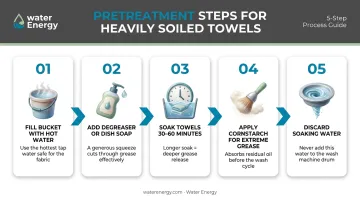
How to pretreat:
- Fill a bucket (not the washing machine) with hot water
- Add a degreasing solution: commercial degreaser, dish soap, or baking soda and vinegar
- Submerge towels and soak 30–60 minutes
- For extreme grease buildup, apply cornstarch or talcum powder to the fabric first, let sit a few minutes, then brush off before soaking
- Discard the soaking water; don't pour it into the machine
Wash the Right Way
Once pretreated, machine-wash shop towels on their own. Never mix them with household laundry. Use a full-length wash cycle, not a quick cycle. Quick cycles don't agitate or rinse thoroughly enough for heavily soiled loads.
Recommended wash settings:
- Water temperature: Hot (130°F+) for heavy grease; warm works for light soil loads
- Detergent: Heavy-duty or industrial-grade; avoid fabric softeners, which reduce absorbency
- Cycle: Heavy-duty or full-length; skip express or delicate settings
- Load size: Keep loads small — overcrowding limits agitation and rinsing
Even with the right settings, persistent odors and chemical residue often survive standard washing. That's where an ozone system changes the equation. Water Energy's Storm injects dissolved ozone (0.8–1.6 ppm) into wash water, breaking down bacteria and odor compounds without relying on heat or heavy chemical loads. It's a practical option for home garages and light shop use. One honest caveat: heavily grease-soaked towels may still need hot water and detergent alongside it. The Storm handles odor and general soiling well; extreme petroleum saturation is its edge case, not its strength.
Choosing the Right Detergent, Water Temperature, and Cycle
Detergent
Use a heavy-duty liquid detergent with degreasing properties. Look for labels like "industrial strength" or "degreasing formula."
Standard household detergents are formulated for everyday clothing soil — they're too mild for oil-saturated rags and leave residue that traps contaminants in the fiber. Insufficient detergent causes oily soil to redeposit on fabric rather than wash out.
One firm rule: never use fabric softener on shop towels. Rinse-cycle softeners deposit cationic surfactant layers onto cotton fibers, and repeated treatments significantly reduce absorbency and wicking performance — rendering the towel far less effective on the next use.
Water Temperature
Once you've chosen the right detergent, water temperature becomes the next decision. The CPSC's cotton-towel study found no statistically significant difference in oil removal across wash temperatures of 70°F, 100°F, and 130°F — presoaking mattered far more than heat. That said, hotter water does help emulsify heavy petroleum grease by reducing its viscosity, so for extreme loads, hot water still has a practical advantage.
- Hot water: Best for heavily oil-soaked towels
- Warm water: Suitable for lightly soiled loads
- Cold water alone: Generally insufficient for oil-heavy rags
Cycle Selection
- Always use a full-length cycle — not quick, not delicate
- For very dirty loads, add an extra rinse cycle to clear detergent and oil residue
- Residual detergent left in fibers attracts dirt and reduces performance on the next use
- Skip bleach — it degrades cotton fibers faster with repeated use and doesn't add meaningful cleaning benefit for oil-based soils
How to Dry Shop Towels Safely
The drying stage is where oily shop towels become a genuine fire hazard. Dryer temperatures range from approximately 125°F on low to 140°F on high — and residual oil left in fabric can oxidize and ignite under that heat, making this the most dangerous step in the process.
Maytag states plainly: "No washer can completely remove oil" and "Do not dry anything that has ever had any type of oil on it." That warning applies regardless of heat setting.
Air Drying (Recommended Default)
- Spread towels flat or hang individually on a metal rack with airflow on both sides
- Do not pile them — heat can build up in a stack even without a dryer
- Most towels dry in 4–8 hours in a ventilated space; a fan speeds this up safely
Air drying is the safest option, but if your situation genuinely calls for machine drying, follow these precautions closely.
If You Machine Dry
Only machine dry shop towels if you are confident the wash cycle removed all oil and solvent residue. When in doubt, air dry.
- Use low to medium heat only
- Check towels after the cycle — stiffness or an oily feel means residue remains
- Rewash before use or storage if either sign is present
Common Washing Mistakes (and When to Replace)
The Most Common Errors
- Overloading the machine leaves towels partly washed — the drum can't agitate properly
- Fabric softener coats fibers and destroys absorbency permanently
- Mixing with household laundry transfers oil and chemicals to clothing and linens
- Too little detergent allows soil to redeposit back into the fiber
- Machine drying before confirming the towel is oil-free is a documented fire risk
The Storage Mistake People Underestimate
Piling used oily shop towels in a plastic bin or cloth bag before washing is a fire hazard. The NPS and NFPA both specify UL-certified metal containers with self-closing lids, kept away from heat sources, for oily rags awaiting washing. Never leave them in a sealed plastic bag or piled in a corner.
When to Replace Instead of Rewash
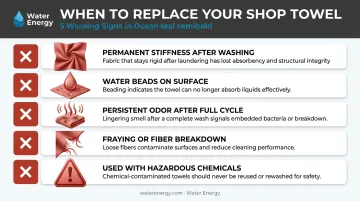
Not every towel can be brought back. Replace when:
- The towel stays stiff after a full wash-and-dry cycle — fiber-embedded residue won't come out
- Water beads on the surface instead of absorbing (the drop test used in AATCC TM79 absorbency testing)
- Persistent odor remains after a complete cycle
- Visible fraying, fiber breakdown, or thinning is present
- The towel was used with hazardous chemicals that require regulated disposal rather than home laundering
Conclusion
Washing shop towels properly comes down to a consistent routine: pretreat, wash separately with the right detergent, skip the fabric softener, air dry when in doubt, and store used rags in a metal container before washing. None of it is complicated — it just has to be done in the right order.
For anyone washing shop towels regularly at home or in a light commercial shop, Water Energy's Storm ozone laundry system is worth a look. It handles most shop rag loads well, with one honest exception: extreme petroleum grease may still need hot water and detergent alongside it.
For everything short of that, the Storm delivers real advantages:
- Reduces detergent use by up to 75%
- Eliminates persistent odors more effectively than standard washing
- Extends fabric life by cutting out hot water and harsh chemicals
The same NASA-proven technology developed for cleaning Space Shuttle components now handles a garage's worth of shop rags at home.
Frequently Asked Questions
Can you wash shop towels in a regular washing machine?
Yes — a standard machine handles shop towels fine, but oil-heavy rags should be pre-soaked in a bucket first. Always wash them separately from household laundry, and run a cleaning cycle on the machine afterward to clear oil residue from the drum.
What is the best detergent for washing shop towels?
A heavy-duty liquid detergent with degreasing properties works best. Standard detergents are too mild for oil and grease and leave residue in the fiber. Never use fabric softener — it coats fibers and reduces absorbency permanently over time.
Can you put shop towels in the dryer?
Only if you're certain all oil and solvent residue has been removed. Maytag's own guidance warns that no washer fully removes oil, and dryer heat can trigger oxidation in residual oil. Air drying is the safer default for any towel used with petroleum products or flammable solvents.
How do you get the smell out of shop towels?
Persistent odor means chemical or oil residue is still in the fibers. Pre-soak in a baking soda or white vinegar solution before rewashing. Ozone-based laundry systems can also eliminate deep-set odors that standard wash cycles leave behind — useful if pre-soaking alone doesn't fully clear the smell.
Should you wash shop towels with regular laundry?
No. Oils, greases, and chemicals from shop towels transfer directly to clothing and household linens in a shared wash cycle, staining them and reducing their usability. Shop towels always get their own load.
How many times can you reuse a shop towel before replacing it?
High-quality shop towels can last dozens of wash cycles with proper care. The replacement trigger isn't a number of uses — it's physical signs:
- Permanent stiffness that doesn't wash out
- Water beading on the surface instead of absorbing
- Persistent odor after a complete clean cycle