The fix isn't complicated, but it does require more than a quick rinse. Results vary based on fabric type, water temperature, contact time, and whether stains and odors are pretreated first. Skip any of those steps and contaminants can survive a full wash cycle.
This guide walks through exactly what to prepare, the step-by-step sanitizing process, the key variables that determine real results, and the mistakes most people make.
Key Takeaways
- Always sanitize used clothes before wearing — they can carry bacteria, fungi, allergens, and pests regardless of how clean they look.
- Sort by fabric type and color first; always check care labels before washing.
- Pre-treat stains and odors before the wash cycle: it makes a measurable difference in results.
- Water temperature, contact time, and sanitizing agent are the three variables that matter most.
- Ozone-based laundry systems sanitize effectively in cold water — useful for delicate fabrics or high-volume thrifted loads.
What to Prepare Before You Start Sanitizing Used Clothes
Skipping the prep step is one of the most common reasons sanitizing fails. Clothes that go straight into the washer without sorting or inspection often come out still carrying odors, stains, or contamination risks — and sometimes spread them.
Supplies You'll Need
- Washing machine or basin
- High-quality laundry detergent
- White vinegar
- Baking soda
- Enzyme-based stain remover
- Clean white cloth (for colorfastness testing)
- Garment steamer (optional, but useful for delicates)
Sort and Inspect Before Washing
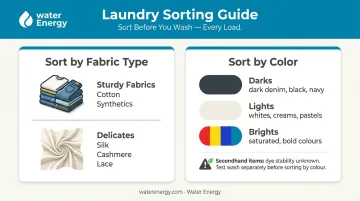
Before anything touches water, sort by two criteria:
- Fabric type — Group sturdy cottons and synthetics separately from delicates like silk, cashmere, and lace, which need lower temperatures and gentler handling.
- Color — Separate darks, lights, and brights to prevent dye bleed, particularly with secondhand items where dye stability is unknown.
While sorting, inspect each piece for visible stains, odors, loose seams, or signs of pest activity.
If you spot evidence of bed bugs — small rust-colored stains on seams, tiny dark specks, or shed skins — seal that item in a plastic bag immediately. Treat it separately before it goes near furniture or other laundry.
How to Sanitize Used Clothes Before Wearing: Step-by-Step
These steps apply to standard machine-washable clothing. Methods for delicates and special fabrics are covered in a later section.
Step 1: Pre-Treat Stains and Neutralize Odors
Don't skip this. The wash cycle alone rarely removes set-in stains or deeply embedded odors.
For visible stains:
- Apply an enzyme-based stain remover or a paste of baking soda and water directly to the stained area.
- Let it sit for at least 15–30 minutes before washing.
- Test on an inconspicuous area first — older dyes can react unpredictably.
For strong odors (musty, smoke, mothball, or heavy perfume):
- Pre-soak the garment in 1 cup of white vinegar per gallon of cool water for 30–60 minutes.
- This neutralizes odors at the fabric level rather than just masking them.
Step 2: Check Care Labels and Determine Water Temperature
Always read the care label before setting wash temperature. Most cotton, linen, and synthetic items handle warm or hot water well. Wool, silk, and vintage pieces need cool or lukewarm water to avoid shrinkage and damage.
Why temperature matters: Research on domestic washing machines found that washing at 60°C (140°F) for approximately 15 minutes produced a 3–5 log reduction in bacterial load on textiles. That said, it doesn't eliminate all resistant organisms like spores or non-enveloped viruses.
If care labels are missing — common in vintage pre-1970s garments — default to hand washing in cool water with a gentle detergent rather than risking damage.
Step 3: Wash Used Clothes Separately on the First Wash
Wash secondhand items alone on the first cycle. Bacteria, dyes, and chemical residues from previously worn clothing can transfer to your regular laundry during that initial wash.
Machine wash process:
- Use the recommended amount of detergent — not more. Excess detergent leaves residue in fibers that causes skin irritation and impairs rinsing.
- Set to the warmest temperature safe for the fabric type.
- Run an extra rinse cycle after the main wash to flush out loosened contaminants and detergent residue.
Step 4: Apply Additional Sanitizing Treatment
Standard detergent removes dirt and oils. Sanitizing requires a separate antimicrobial step on top of that.
Options:
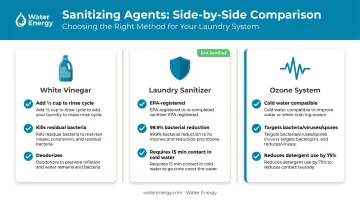
- White vinegar: Add ½ cup to the rinse cycle. It helps kill residual bacteria and deodorizes fabric.
- Laundry sanitizer: Products like Lysol Laundry Sanitizer carry EPA registration (Reg. No. 777-128) for 99.9% bacterial reduction when used at labeled dosing with 15 minutes of full contact time in cold water. Note that many modern HE machines can't pause mid-cycle, so check your model first.
- Ozone-based laundry systems: Water Energy's Storm uses NASA-developed TecH2Ozone technology to dissolve ozone into cold wash water at 0.8–1.6 ppm, targeting bacteria, viruses, and spores without heat or heavy chemicals. That makes it especially practical for vintage pieces where hot water isn't an option. It also cuts detergent use by up to 75%, leaving fewer chemical residues on skin-contact fabrics.
Step 5: Dry Correctly to Finish the Sanitizing Process
Drying is part of the sanitization process, not just a finishing step.
For sturdy fabrics (cotton, denim, towels): Machine dry on medium-to-high heat. The EPA specifies 30 minutes on high heat in a household dryer to kill bed bugs and their eggs. High heat also addresses odor-causing bacteria and mites that survive the wash cycle.
For delicates that can't handle dryer heat:
- Hang dry in direct sunlight — UV light acts as a natural disinfectant and helps neutralize organic odors.
- Lay flat in a well-ventilated space if sunlight isn't available.
- Avoid wire hangers for delicates, which can distort shape during drying.
Key Factors That Affect How Well Used Clothes Get Sanitized
Even if you follow every step correctly, these four variables determine whether clothes are genuinely sanitized or just visually clean.
Water Temperature
Heat above approximately 60°C (140°F) denatures bacterial proteins effectively — but it isn't a universal kill point for all pathogens. Resistant organisms like spores, fungi, and non-enveloped viruses can survive standard hot cycles, especially without adequate contact time or detergent chemistry.
The trade-off: high heat sanitizes but can shrink, fade, or permanently damage natural and vintage fabrics. Ozone washing in cold water works for temperature-sensitive items without the thermal damage risk.
Fabric Type and Construction
Fabric structure affects how deeply contaminants penetrate. An in-vitro study found that polyester and acrylic bound more than 80% of tested bacteria, compared to less than 10% for cotton. Synthetics can hold onto contaminants more stubbornly, so they typically benefit from longer contact time or a stronger sanitizing agent.
Dense weaves like denim trap fewer pathogens than loose knits, but both benefit from pre-soaking and a proper sanitizing agent.
Contact Time and Soaking
A quick rinse is not the same as a full wash cycle with a pre-soak. Contact time (how long fabric is exposed to a sanitizing agent) directly determines effectiveness.
For heavily used or strongly odorous items, a pre-soak of 30–60 minutes before the main wash cycle makes a measurable difference.
Detergent and Sanitizing Agent Selection
- Detergent cleans — it removes dirt, oils, and surface-level contamination.
- Sanitizers kill — they require specific concentrations, contact times, and application methods to be effective.
Detergent alone may not be enough for true sanitization of used clothing. Adding vinegar, a registered laundry sanitizer, or an ozone system provides the antimicrobial component that detergent lacks.
Too much detergent causes its own problems. Excess residue trapped in fabric fibers causes skin reactions, reduces softness, and makes thorough rinsing harder to achieve.
Common Mistakes When Sanitizing Used Clothes
Even with the best intentions, a few common errors can leave secondhand clothes dirtier than expected — or damage them entirely. Watch out for these:
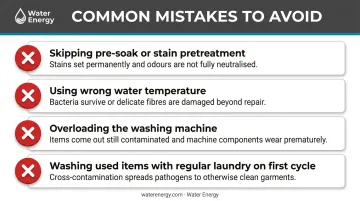
- Skipping pre-soak or stain pretreatment — Washing cycle agitation alone rarely removes set-in stains or odors. Pretreatment isn't optional; it's what makes the wash cycle actually work.
- Using the wrong water temperature — Hot water on wool, silk, or vintage cotton causes irreversible shrinkage. Cold water without a sanitizing agent, on the other hand, may leave pathogens alive after the cycle.
- Overloading the washing machine — When a washer is overloaded, detergent and water can't reach every garment. Major appliance manufacturers cite this as a documented cause of poor cleaning performance, which explains why "freshly washed" thrifted clothes sometimes still smell.
- Washing used items with your regular laundry on the first cycle — Dyes, bacteria, and chemical residues from secondhand clothing can transfer to your everyday items. Always run that first wash separately.
Sanitizing Methods for Delicate and Special Fabrics
Not everything can go through a standard machine wash. Vintage lace, silk, sequined garments, structured formal wear, and heavily embellished pieces need alternative methods.
Steam Cleaning
A garment steamer producing at least 130°F is effective for killing bed bugs in clothing, according to Penn State Extension — move slowly, spending about 10–15 seconds per linear foot. Pay extra attention to seams, collars, cuffs, and inner linings where contaminants concentrate most. Steam is practical for delicates that can't be submerged or agitated in a washer.
Hand Washing
For fragile pieces:
- Fill a basin with cool water and a teaspoon of gentle detergent, plus a small amount of white vinegar.
- Fully submerge the garment and gently agitate — no wringing or scrubbing.
- Rinse until the water runs clear.
- Press (never twist) excess water out before hanging to dry in a ventilated space or sunlight.
Professional Green Dry Cleaning
For highly intricate vintage pieces (beading, embroidery, structured linings), professional dry cleaning may be the safest option. Choose carefully, though. The EPA's final risk evaluation found that perchloroethylene (PERC), the traditional dry cleaning solvent, poses unreasonable risk to human health — including neurotoxicity and cancer hazards. A 2024 EPA rule phases out PCE use in dry cleaning through 2034.
When choosing a cleaner, ask specifically about these documented safer methods:
- Professional wet cleaning — water-based process using specialized equipment and biodegradable detergents
- Liquid CO2 cleaning — pressurized CO2 replaces solvents with no toxic residue
- "Green" marketing — not a regulated term; ask for the specific process used before booking
Conclusion
Sanitizing used clothes before wearing is always necessary, regardless of how clean they look. The right approach depends on matching the method to the fabric and the level of contamination. Most failures trace back to the same handful of causes: skipping pretreatment, using the wrong water temperature, or not giving the sanitizing agent enough contact time to work.
For households that thrift regularly — or have family members with sensitive skin — Water Energy's Storm system takes the temperature guesswork out of the equation. It dissolves ozone directly into cold wash water using the TecH2Ozone mass transfer process originally developed for NASA's Space Shuttle Program, killing pathogens and eliminating odors without chemical residues. That makes it especially practical for vintage or delicate pieces that can't tolerate heat.
Both the Storm Deluxe and Storm OPL Deluxe are priced at $399, install in about 30 minutes, and require no ongoing maintenance — so the sanitization is built into every wash, not something you have to think about separately.
Frequently Asked Questions
Should you sanitize thrifted clothes?
Yes — always wash thrifted clothes before wearing them. Used clothing may carry bacteria, fungi, dust mites, allergens, and residues from previous owners or storage, even when items look and smell clean. A 2021 study found parasites on 5.5% of unwashed secondhand garments tested.
How do you make sure thrifted clothes don't have bed bugs?
High-heat drying is the most reliable method. The EPA specifies 30 minutes on high heat in a household dryer to kill bed bugs and their eggs. Seal the item in a plastic bag until you can dry it on high heat, and keep it away from furniture and bedding until treated.
Do thrift stores wash clothes before putting them out?
Most do not. Goodwill of Northwest North Carolina and MERS Missouri Goodwill both explicitly state they don't launder donations before placing them on the sales floor. Volume makes it impractical — which is why washing before wearing is the buyer's responsibility.
What temperature kills germs in used clothing?
Research on domestic washing machines found that approximately 60°C (140°F) for 15 minutes kills the majority of bacteria. Resistant organisms like spores and some viruses may need additional measures: detergent chemistry, bleach, or sufficient drying time for more complete results.
Can you wash thrifted clothes with your regular laundry?
Not on the first wash. Dyes, bacteria, and residues from secondhand clothing can transfer to your regular items in that initial cycle. After the first sanitizing wash, they can be laundered normally alongside everything else.
How do you get the musty or thrift store smell out of used clothes?
Pre-soak in a white vinegar and water solution (1:4 ratio) for 30–60 minutes, then run a full wash cycle. For persistent smoke, mildew, or vintage odors, drying in direct sunlight helps — or ozone-based washing, which breaks down odor compounds rather than covering them up.