This guide covers the non-negotiable core supplies, useful boosters worth keeping on hand, the tools that prevent common laundry problems, and smarter alternatives for households with sensitive skin or environmental goals.
Key Takeaways
- Laundry detergent, stain remover, and bleach are the three core supplies every household needs
- Boosters like fabric softener and washing machine cleaner improve results but aren't required for every load
- The right tools — sorting hampers, drying racks, and mesh laundry bags — protect fabrics from damage and color bleed
- Fragrance-free, dye-free detergents are the safest default for sensitive skin households
- Ozone laundry systems can replace several chemical additives in a single upgrade
The Laundry Supplies You Should Always Have on Hand
The core list is shorter than most people expect, but each item has a specific job. Skip one and you'll notice.
Laundry Detergent
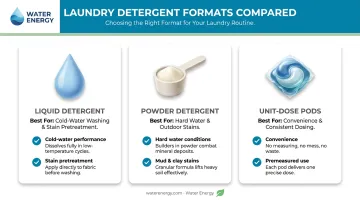
Three main formats, each with a distinct use case:
- Liquid detergent — dissolves readily in cold water and doubles as a pretreatment for greasy or oily stains
- Powder detergent — typically more concentrated; Whirlpool identifies mud, clay, and hard-water washing as its strengths
- Unit-dose pods — premeasured and mess-free, but not adjustable for smaller or heavily soiled loads
If you have a front-load or newer HE top-loader, check your washer manual — most require HE-specific detergent.
Using a non-HE formula, or simply using too much of any detergent, causes oversudsing, poor rinsing, and white residue on clothes. GE identifies overuse as the most common cause of rinse complaints.
Stain Remover
Timing matters more than product here. The American Cleaning Institute is clear: treat stains as soon as possible because shorter dwell time makes removal much easier.
Your format options:
- Pre-wash sprays or gels — applied right before the wash cycle; best for most everyday stains
- Stain pens — portable, useful for catching spills before they set
- Enzyme-based formulas — most effective on protein stains like blood, grass, sweat, and baby formula — protease targets proteins, lipase targets fats, amylase breaks down starch
Bleach: Chlorine and Color-Safe Options
These are two different products with different jobs:
- Chlorine bleach (sodium hypochlorite) — whitens and disinfects whites and colorfast fabrics, but never use on wool, silk, mohair, or spandex
- Oxygen/color-safe bleach (sodium percarbonate) — gentler and suitable for colored fabrics; releases hydrogen peroxide in water to lift stains without stripping dye
Most households benefit from keeping both. Key rules: always dilute chlorine bleach before adding it to a load, check care labels first, and — per the CDC — never mix it with other cleaners. Mixing with ammonia or acids produces dangerous gases.
Washing Machine Cleaner
Detergent residue, mildew, and mineral deposits accumulate inside the drum over time, producing musty-smelling clothes even after a fresh wash. Monthly cleaning prevents this.
Manufacturer benchmarks vary slightly, but the general guidance aligns:
| Brand | Recommended Cleaning Frequency |
|---|---|
| Whirlpool | Every 30 days or 30 wash cycles |
| LG | Monthly; weekly for 3 weeks if musty odor is present |
| GE | Monthly (or ~40 cycles for select UltraFresh models) |
| Samsung | Every 20 cycles (top-load) or 40 cycles (front-load) |
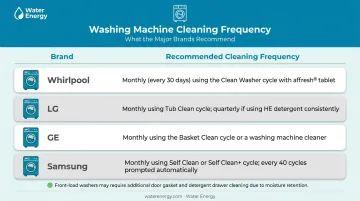
Front-loaders are particularly prone to mold and mildew because the door gasket retains water and soil between washes. If you have one, don't skip this.
Laundry Boosters and Additives Worth Stocking
Boosters aren't required for every load — but they earn their place for specific needs.
Fabric Softener and Dryer Sheets
Both reduce static and soften fabric, but they work differently:
- Liquid fabric softener — added to the rinse cycle; more effective on towels and bedding
- Dryer sheets — added to the dryer; more convenient for everyday loads
One important caveat: fabric softener coats fibers with a chemical film that reduces moisture absorption over time. Whirlpool notes it can also affect the self-extinguishing performance of flame-resistant garments. Avoid it entirely on children's sleepwear labeled flame-resistant, and use it selectively on towels.
Enzyme Presoak
Households with kids, athletes, or pets get the most value from enzyme presoaks. Standard detergent can't fully break down protein-based stains — enzyme formulas do. Soak the garment for at least 30 minutes (follow the product label) before washing for best results.
Water Softener or Laundry Booster
Hard water contains dissolved calcium and magnesium that react with detergent to form a gummy residue, consuming cleaning power before it reaches your clothes. The visible result shows up in your laundry:
- Fabrics feel stiff and scratchy after washing
- Colors look dull or dingy over time
- You end up using more detergent to compensate
If your water is hard, a powdered laundry water softener added to the wash cycle compensates for mineral interference. The USGS confirms that hard water requires significantly more soap or detergent to clean effectively — so for affected households, a water softener booster pays for itself in reduced detergent use.
Essential Laundry Tools and Equipment
The right tools prevent the most common laundry problems: color bleeding, stretched delicates, wrinkles from sitting in the dryer, and fabric pilling from friction.
Sorting Hamper and Mesh Laundry Bags
A multi-section hamper that pre-separates darks, lights, and colors turns sorting from a separate task into something that happens automatically. Look for one with wheels or handles — laundry is heavy.
Mesh laundry bags handle a different problem: protecting delicates (lingerie, hosiery, workout wear) from the friction and tangling that damages them in a regular machine cycle. Keep a few on hand.
Drying Rack and Retractable Clothesline
A freestanding drying rack is useful in every household, regardless of whether you own a dryer. Delicates, items prone to shrinking, and garments with "lay flat to dry" labels all need it. Air drying extends fabric life compared to repeated dryer cycles.
For smaller laundry rooms, a retractable clothesline saves space while offering the same function. Check the weight capacity before buying — it matters more than most people expect.
Lint Roller and Dryer Vent Brush
These two tools serve very different purposes:
- Lint roller — removes pet hair, lint, and debris quickly from clothing and upholstery; a reusable roller is more economical than disposable sticky-sheet versions
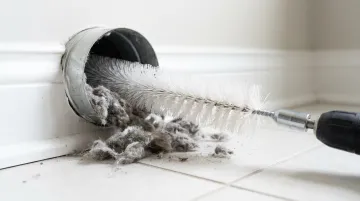
- Dryer vent brush — clears lint buildup from the exhaust duct, reducing fire risk and keeping drying times efficient
NFPA data estimated 13,820 home dryer fires annually between 2014 and 2018. USFA reports that failure to clean was the leading contributing factor in 31% of home clothes-dryer fires between 2018 and 2020. Clean the lint screen before or after every load, and use a vent brush to clear the exhaust duct every 6–12 months.
Garment Steamer or Iron
The choice depends on what you wear most often:
- Garment steamer — faster and gentler; works well on blouses, suits, and drapes without scorching risk
- Traditional iron — better for sharp creases on cotton shirts and dress pants
- Both — worth having if your wardrobe mixes casual and formal pieces
If you're picking one, a steamer handles more fabric types safely and takes less setup time.
How to Store and Organize Your Laundry Supplies
Heat, humidity, and direct sunlight degrade detergents and bleach faster than most people realize. Cabinet or shelf storage away from the dryer's heat vent preserves product effectiveness.
Organization tips that actually work:
- Group supplies by frequency of use — daily-use detergents at the front, occasional boosters on a back or higher shelf
- Labeled bins prevent the "mystery bottle" problem and stop products from expiring unused
- Use a tiered shelf organizer to maximize vertical space in smaller laundry rooms
Laundry Pod Safety
One non-negotiable safety rule: laundry pods must be stored in a locked or child-resistant container, out of reach and out of sight. America's Poison Centers reported 1,423 exposure cases involving children under five as of February 2024. Their candy-like appearance makes them genuinely dangerous — the ACI recommends keeping pods in their original closed container, stored well out of reach.
Eco-Friendly and Sensitive Skin Laundry Swaps
Households managing allergies, eczema, or skin sensitivities should prioritize fragrance-free, dye-free detergents as the starting point. Optical brighteners — fluorescent agents that absorb UV light and emit visible blue light — remain on fabric after washing and can irritate reactive skin. They're worth avoiding if sensitivity is a concern.
Sustainable swaps that reduce waste without sacrificing results:
- Wool dryer balls instead of single-use dryer sheets — reusable and chemical-free, though note that controlled testing found they don't reliably improve drying speed or softness compared to dryer sheets
- Concentrated detergent formulas — same cleaning power, less plastic packaging per load
- Cold-water washing — ENERGY STAR reports that water heating accounts for roughly 90% of clothes-washer operating energy, making cold-water washing the single highest-impact change most households can make
Reducing the number of additives per load also reduces the chemical residue left on fabric — which causes stiffness, dullness, and skin irritation over time. Fewer products in the wash means less residue on the fabric, which translates directly to softer feel and fewer skin reactions — especially for children and anyone with chronic sensitivities.
Modern Upgrades That Simplify Your Laundry Routine
Some laundry technology is designed to reduce the number of products you need, not just improve them. Ozone-based systems infuse wash water with dissolved ozone — a powerful oxidizer that breaks down bacteria, odors, and soils without multiple chemical additives.
Water Energy's Storm system brings this to residential laundry rooms. It's built on the Tech2Ozone process the company developed with NASA in the 1990s to clean Space Shuttle components without generating toxic wastewater — the same core engineering, backed by 25 years of commercial laundry experience.
For the eco-conscious and sensitive skin households discussed in the previous section, the Storm addresses several supply categories at once:
- Reduces detergent use by 70% or more (some users wash with no detergent at all)
- Eliminates the need for fabric softener by removing chemical residues that make fabrics feel stiff
- Replaces hot-water washing entirely, working effectively in cold water only
- Removes the need for separate odor-eliminating additives or scent boosters

The Storm Deluxe ($399) installs in 30 minutes or less, connects directly to your washer's water supply line, and requires no ongoing maintenance — no consumables to replace, no adjustments to make. It's compatible with all residential washers, including HE front-loaders and top-loaders.
For households looking to cut their supply list down to the basics, the Storm replaces several product categories with a single installation — making it a practical complement to the foundational swaps covered above.
Frequently Asked Questions
What are the laundry essentials?
The core three are laundry detergent, stain remover, and bleach (chlorine or color-safe, depending on your fabrics). From there, a sorting hamper and drying rack round out a complete functional setup for most households.
What laundry supplies do I need when starting out for the first time?
Start with liquid detergent, a color-safe bleach, and a stain remover spray. Add a hamper and a few mesh laundry bags for delicates. Hold off on boosters until you understand your actual laundry needs. Most beginners stock extras they never end up using.
Do I really need fabric softener?
No — it's optional. It reduces static and adds softness but can reduce towel absorbency over time and irritate sensitive skin. Wool dryer balls are a reusable, chemical-free alternative, though they won't replicate dryer sheets' antistatic effect.
How do I stock laundry supplies for sensitive skin?
Use a fragrance-free, dye-free detergent and skip optical brighteners. Keep additives to a minimum, and rinse loads fully to reduce chemical residue against skin.
How often should I clean my washing machine?
Monthly cleaning with a washing machine cleaner tablet or liquid prevents mildew, odor, and detergent buildup. Front-loaders may need more frequent attention than top-loaders because the door gasket traps moisture between cycles.
Can I reduce the number of laundry products I use without sacrificing cleanliness?
Yes. Cold-water washing with a good concentrated detergent handles most loads effectively. For a bigger reduction, ozone laundry systems like Water Energy's Storm cut reliance on detergent, fabric softener, and odor eliminators while still delivering a thorough, clean wash.