
Introduction
Most households do laundry at least once a week and still pull the same frustrating results out of the machine — stiff towels, clothes that smell musty straight out of the wash, colors that fade faster than they should, or a favorite sweater that's two sizes smaller than it used to be.
The problem isn't effort. It's that most laundry problems trace back to a handful of root causes that keep getting ignored: using too much detergent, washing at the wrong temperature, overloading the machine, or skipping pre-treatment entirely.
According to a Consumer Reports survey of over 95,000 washer owners, odor is reported by 8% of users and mold/mildew by 7% — numbers that climb to 13% each for front-loader owners.
Those numbers point to the same underlying pattern: laundry problems rarely have complicated causes. Fix the root habit, and several problems often disappear at once. This guide covers the most common issues, what's driving them, and exactly what to change.
Key Takeaways
- Persistent odors, fabric damage, stubborn stains, and color bleeding are the four most common laundry problems
- Most stem from excess detergent, wrong water temperature, overloading, or skipped pre-treatment
- Fixing the root cause, not just the symptom, is what stops problems from coming back
- Cold water washing cuts ~90% of washer energy used for heating water, while preserving fabric and color
- A dirty washing machine re-contaminates every load; clean yours monthly to avoid undoing your own work
Common Laundry Problems and What's Causing Them
Most laundry problems — persistent odors, faded colors, stubborn stains — come down to a handful of predictable causes. Identifying the right one means you fix it once, not every other wash.
Persistent Odors After Washing
Clothes smell musty, sour, or stale right after a wash cycle — towels and workout gear are the most frequent offenders.
Likely causes:
- Low-temperature cycles that don't eliminate bacteria at the source
- Detergent residue trapping odor-causing compounds inside fabric fibers
- Wet laundry left sitting in the drum — Consumer Reports notes mold can develop in as little as 24–48 hours in a closed, wet washer
- A dirty washing machine redistributing bacterial contamination onto otherwise clean items
Fabric Damage — Shrinkage, Fading, and Rough Texture
Garments come out smaller than before, colors look washed out after just a few cycles, or towels feel stiff and scratchy instead of soft.
Likely causes:
- Hot water breaks down natural fibers (cotton, wool) and causes shrinkage
- Harsh detergent chemicals and over-drying strip dyes and leave residues that stiffen fabric
- Product buildup — not dirt — is usually what makes towels feel rough
Stubborn Stains That Won't Come Out
Coffee, oil, grass, or wine stains survive a full wash cycle — and some appear to darken after drying.
Likely causes:
- Delayed treatment allows the stain to bond with fabric fibers
- Putting stained items in the dryer before the stain is removed permanently sets it
- Over-scrubbing spreads the stain and damages the fabric weave
- Using the wrong treatment type for the stain chemistry
Color Bleeding and Dye Transfer
White items develop pink or gray tones; new dark garments transfer dye onto other clothes in the same load.
Likely causes:
- Mixing darks and lights in the same load
- Washing new items without separating them first
- Warm or hot water accelerating dye release — a 2020 textile study found greater color transfer at 40°C compared to 25°C
How to Fix the Most Common Laundry Problems
Applying a generic solution to a specific problem often makes things worse. Using more detergent to fight odors — a common instinct — actually compounds the residue problem that's causing them.
Eliminating Persistent Odors
Start by ruling out the machine itself. A washing machine that isn't cleaned regularly becomes a bacterial reservoir that re-deposits contamination onto every load. Check the drum, door seal, and detergent drawer first.
Immediate fixes:
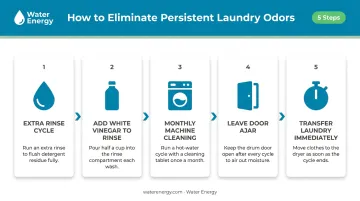
- Run affected items through an extra rinse cycle to flush out residue buildup
- Add white vinegar to the rinse cycle for musty towels — it breaks down trapped bacteria and chemical deposits
- Clean the machine monthly using a hot-water cleaning cycle with a machine-cleaning tablet
- Leave the door ajar after every cycle to prevent mildew forming inside the drum
- Transfer laundry to the dryer as soon as the cycle ends
For workout gear or items with embedded odors, standard detergent cycles often fall short because they don't address bacteria at the source. Water Energy's Storm system uses the Tech2Ozone process, originally developed for NASA's Space Shuttle Program, to infuse cold water with dissolved ozone at 0.8–1.6 parts per million. It eliminates odor-causing bacteria rather than masking them with fragrance — no hot water required.
Reversing and Preventing Fabric Damage
ENERGY STAR reports that water heating accounts for roughly 90% of the energy a clothes washer uses — so switching to cold isn't just gentler on fabrics, it's noticeably cheaper to run.
Practical steps:
- Switch to cold water as the default for most loads — it reduces shrinkage risk, preserves color vibrancy, and protects elastic fibers
- Measure detergent accurately instead of estimating; excess detergent doesn't rinse out fully, leaving residue that stiffens fabric, dulls colors, and attracts dirt between washes
- Try reducing your usual dose and checking whether results actually improve — many users find they can cut significantly without any drop in cleaning performance
- Air dry or use low-heat settings for delicates, anything with elastic, and athletic wear; dryer heat degrades elastic and synthetic fibers faster than normal wear does
Removing Stubborn Stains
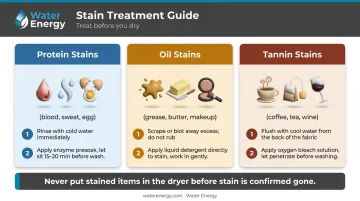
The non-negotiable rule: Never put a stained item in the dryer until the stain is confirmed gone. Heat permanently bonds stain compounds to fabric. Air dry and re-inspect first.
Treatment by stain type:
| Stain Class | Examples | Treatment Approach |
|---|---|---|
| Protein | Blood, sweat, egg | Cold water first; enzyme presoak; no heat until removed |
| Oil | Grease, butter, makeup | Remove excess, apply liquid detergent directly, wash at warmest temperature care label allows |
| Tannin | Coffee, tea, wine | Rinse promptly in cool water, pretreat, then launder with oxygen bleach if fabric permits |
When treating any stain, blot — don't scrub. The Smithsonian's conservation guidance is unambiguous: rubbing abrades fabric and can rip the weave. Repeated gentle lifting removes far more than aggressive scrubbing.
Preventing Color Bleeding and Dye Transfer
- Sort every load: darks and brights separate from whites and lights
- Wash new dark or brightly colored items alone or with similar colors for the first wash to let excess dye release safely
- Use cold water for all colored loads — dye desorption rates rise sharply between 20°C and 40°C
- Turn dark items (especially jeans) inside out before washing to protect outer fibers and slow fading
Why Laundry Problems Keep Coming Back
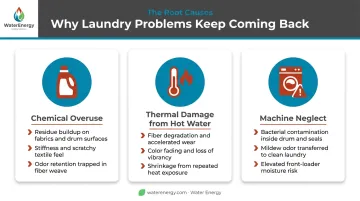
Individual fixes address symptoms, but recurring laundry problems usually trace back to three systemic root causes.
Chemical overuse. Excess detergent, fabric softener, and dryer sheet residue accumulate in fibers over multiple washes. Clothes feel clean but harbor trapped buildup that causes stiffness, odor retention, skin irritation, and reduced absorbency in towels. Whirlpool and LG both link excess detergent to poor rinsing, re-deposition on fabrics, and musty odor development.
Thermal damage from hot water. Consistently washing in hot water degrades fibers, sets certain stains, fades dyes, and shrinks natural fabrics. The damage is cumulative — often invisible after a single wash, but it compounds over dozens of cycles.
Machine neglect. A washing machine that isn't regularly cleaned becomes a source of bacterial contamination and mildew odor. Studies on household washers consistently find higher microbial loads in front-loaders, with door seals and detergent drawers among the most contaminated sites. If laundry still smells despite fresh detergent, inspect the machine before changing anything else.
Common Laundry Mistakes That Make Things Worse
Most laundry problems stick around because the fix is aimed at the wrong target. These five mistakes are the most common reasons problems get worse instead of better:
- More product doesn't fix the root cause. Using extra detergent to fight odors, cranking up heat to remove stains, or rewashing without changing the method all reinforce the underlying issue and wear out fabric faster.
- Care labels exist for a reason. Temperature, spin speed, and drying instructions account for how each material responds to heat, agitation, and chemicals. Ignoring them leads to irreversible damage.
- Scrubbing spreads stains. Aggressive rubbing works the stain deeper into the fabric weave and can break fibers. Blot and lift — always.
- Empty pockets cause real damage. Tissues, pens, lip products, and coins cause staining, fabric tears, and machine damage that affects future wash results.
- One good wash isn't a confirmed fix. After adjusting detergent dose, temperature, or settings, monitor several loads before concluding the change worked.
Preventive Measures for a Better Laundry Routine
Prevention costs far less — in time, money, and fabric life — than repeated fixes.
Build Consistent Habits Before Every Load
These steps take under two minutes and prevent most common problems before they start:
- Sort by color and fabric weight
- Check all pockets
- Pre-treat stains immediately — not after the load runs
- Button and zip garments to prevent snags
Maintain the Machine and Calibrate Product Use
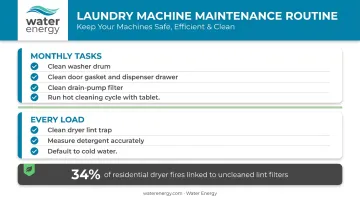
- Clean the washer monthly — Samsung recommends monthly drum cleaning; LG advises cleaning the tub, door gasket, dispenser, and drain-pump filter at the same interval
- Clean the dryer lint trap after every single load — the USFA identified failure to clean lint filters as a leading factor in 34% of residential dryer fires in its research data
- Measure detergent accurately every time
- Default to cold water for most loads
For Recurring Problems: Address the Root Cause Systematically
Households dealing with persistent odors, skin sensitivities, or high laundry volumes often find that habit changes alone don't resolve the issue — because standard detergent-based cold washing can't address bacteria at the fiber level.
Water Energy's Storm system takes a different approach. The TecH2Ozone process, originally developed for NASA's Space Shuttle Program, infuses cold wash water with dissolved ozone at 0.8–1.6 ppm. This oxidative action eliminates odor-causing bacteria, breaks down chemical residue buildup, and reduces detergent use by up to 75%, all without hot water.
The Storm installs in 30 minutes, requires no ongoing maintenance, and works with all residential washing machines. Verified customers report measurable results across a range of challenging situations:
- A family of six calls it essential for managing laundry for four kids and two dogs
- Pet owners wash dog bedding detergent-free with results that "smell like new"
- A grandmother whose special-needs grandchild had chronic skin rashes saw them resolve after switching to ozone washing
Frequently Asked Questions
What is the most common problem with a washing machine?
The most common reported issues are odor (8% of users), mold and mildew (7%), and poor cleaning performance — all of which are largely preventable through correct detergent dosing, avoiding overloading, and monthly machine cleaning. Front-loader owners see higher rates, with mold and odor each reported by 13%.
What are the most common laundry mistakes to avoid?
Using too much detergent, not sorting by color and fabric type, ignoring care labels, overloading the washer, and putting stained items in the dryer before the stain is confirmed gone. These five mistakes account for the majority of recurring laundry frustrations.
Why do my clothes still smell after washing?
Lingering odors usually come from bacteria surviving the wash cycle, detergent residue trapping odor compounds in fibers, wet laundry left sitting in the drum too long, or a dirty washing machine redistributing mildew contamination onto clean items.
How do I stop my clothes from fading in the wash?
Wash darks inside out in cold water, sort by color every load, and reduce detergent use to prevent fiber-stripping residue buildup. Air dry or use low-heat settings when possible. Cold water is the single most effective change for preserving color, since warm and hot water accelerates dye release.
Can cold water washing actually clean clothes properly?
Yes. Modern detergents are formulated to work at cold temperatures, and ozone washing delivers sanitizing performance that rivals or exceeds hot water cycles. Cold water also protects fabric, preserves color, and reduces energy use — water heating accounts for roughly 90% of a washer's total energy consumption.
When should you pause doing laundry?
Pause when a stain needs proper pre-treatment first, when you don't have a correctly sorted load (mixing colors risks dye transfer), or when the washing machine needs cleaning — running a fresh load through a contaminated machine undoes the wash entirely.