This is one of the most common household frustrations, and the root cause is straightforward: sweat, bacteria, and moisture combine in a confined space, creating a self-reinforcing odor cycle. Research on textile microbiology confirms that odor-causing bacteria — including Micrococcus luteus and Corynebacterium species — metabolize sweat and skin oils into volatile compounds that produce that distinctive, unpleasant smell.
The fix isn't a scented spray. These five tips address the actual problem: eliminating bacterial activity, improving airflow, and breaking the cycle at its source.
Key Takeaways
- Trapped moisture is the primary driver — airflow is your first line of defense
- Baking soda neutralizes odors at the chemical level — no masking, no fragrance cover-up
- The basket itself harbors odor-causing bacteria and must be cleaned regularly
- Clothes carry bacteria into the basket — addressing the source prevents re-contamination
- Your choice of hamper material and design determines how quickly odors take hold
Tip 1: Improve Airflow to Stop Moisture From Taking Over
Moisture is what allows odor-causing bacteria to thrive. Without it, bacterial metabolism slows dramatically and volatile odor compounds stop forming at meaningful rates. A controlled ventilation study found that raising relative humidity from 50% to 70% increased bacterial growth nearly 3-fold — and that airflow reduced growth by approximately 169-fold under warm, humid conditions.
Let Damp Items Dry First
The single most impactful habit change: never drop sweaty gym clothes, damp towels, or wet swimwear directly into the basket. Let them air-dry fully first.
A simple hook or small drying bar mounted near the hamper makes this easy. One or two items hung for 30–60 minutes before going into the basket can noticeably slow odor buildup across the whole load.
Reposition or Crack Open the Hamper
- Move the hamper out of enclosed closets or poorly ventilated corners
- Choose a location with some ambient airflow
- On laundry days, prop the lid slightly open to release trapped humidity
- Avoid placing the basket against walls on multiple sides, which restricts air movement
Small placement adjustments like these cost nothing and can make a real difference before odors have a chance to set in.
Tip 2: Place a DIY Natural Deodorizer Inside the Basket
The Baking Soda Pouch
Baking soda (sodium bicarbonate) works because it reacts with acidic odor compounds — like butyric acid, which is a major contributor to that characteristic "sweaty clothes" smell. It converts volatile acids into non-volatile salts, physically pulling them from the air.
To make a deodorizing pouch:
- Fill the foot of an old stocking or a small square of cheesecloth with ½ cup of baking soda
- Add 15–20 drops of an antibacterial essential oil — tea tree, lavender, or eucalyptus all work
- Tie it off securely and place it at the bottom of the basket
- Replace every 2–3 weeks to maintain effectiveness
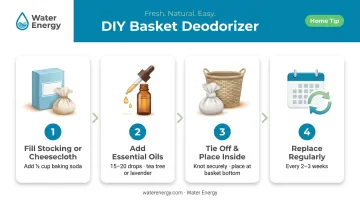
Essential oils contribute scent and some antimicrobial activity, but their effectiveness depends on concentration and contact time. Treat them as a complement to the baking soda, not a replacement. Also avoid applying oils directly to plastic or wicker basket surfaces — they can degrade certain materials over time.
The White Vinegar Spray Option
For a spray-on approach, mix 1 part white vinegar to 3 parts water in a spray bottle. Here's how to use it effectively:
- Mist the inside of an empty basket evenly
- Let it air-dry completely before adding clothes
- Reapply weekly or after washing the basket
Acetic acid disrupts odor-causing bacterial activity and evaporates cleanly, leaving no residue.
Tip 3: Deep-Clean the Basket on a Regular Schedule
How to Clean It
Odors persist in an empty basket because the bacteria don't leave with the clothes. Research shows that odor-causing organisms like Micrococcus luteus can form biofilms on surfaces and adhere irreversibly to materials after drying. That smell from an empty hamper is microbial buildup embedded in the container itself — not leftover clothing odors.
Cleaning the basket regularly breaks that cycle. Here's how:
- Empty completely and shake out any lint or debris
- Wipe all interior surfaces with a white vinegar–water solution (1:1 ratio) using a microfiber cloth
- Air-dry in indirect sunlight for at least 20 minutes before returning clothes to it
Avoid scrubbing with liquid dish soap or laundry detergent — soap leaves residues in the basket material that can feed continued bacterial growth. Vinegar and water is enough.
How often you repeat this process depends on your household.
How Often to Clean
| Household Type | Recommended Frequency |
|---|---|
| Average household | Monthly |
| Active athletes, young children, pets | Every two weeks |
| High-humidity climates | More frequently as needed |
Material-specific notes:
- Plastic and metal — wipe down easily with vinegar solution
- Fabric liners — machine-wash if the care label allows
- Wicker and woven baskets — spot-clean only, then dry thoroughly to prevent mildew in the weave
Tip 4: Address the Clothes Before They Hit the Basket
Breaking the Re-Contamination Loop
Laundry basket odors are often a symptom of what's going into the basket, not just what's happening inside it. Clothes carry bacteria, body oils, and skin-derived compounds from the moment you take them off. If bacteria-laden items sit in a closed hamper for days, they transfer odor molecules to everything else in the pile.
A 2025 systematic review on textile microbial transfer found that moist textile-to-textile contact transferred 0.15–2.5% of bacteria between fabrics, compared to just 0.01–0.02% for dry contact. Wet or sweaty clothes in a closed hamper create exactly the moist contact conditions that maximize this transfer.
Practical Habits That Help
- Turn heavily soiled items inside-out before dropping them in — this limits direct bacteria contact with other fabrics
- Wash high-odor items promptly rather than letting them sit for days
- Store gym clothes and towels in a separate ventilated bag if they can't air-dry first
For Persistent or Severe Odor Problems
When standard laundry habits aren't enough, the issue often lies in what survives the wash cycle itself. Conventional detergents can leave chemical residues in fabric fibers that hold moisture, allowing odor-causing bacteria to persist between washes. Those clothes go right back into the basket, restarting the cycle.
Water Energy's GLS² Storm Deluxe tackles this by introducing dissolved ozone (at 0.8–1.6 ppm) directly into cold wash water. It oxidizes odor-causing bacteria like Staph and C. difficile on contact rather than masking them. Because ozone leaves no chemical residue in fabrics, clothes come out genuinely clean. Multiple customers report eliminating persistent odors from towels, pet bedding, and athletic gear entirely, without detergent. The system installs in about 30 minutes and requires no ongoing maintenance.
Tip 5: Choose the Right Hamper Material to Resist Odors Long-Term
Not all hamper materials handle moisture and bacteria the same way. Choosing the right one doesn't eliminate the need for cleaning, but it does determine how fast smells develop between cleanings.
Material Comparison
| Material | Odor Resistance | Cleanability |
|---|---|---|
| Plastic | Good — non-porous, doesn't absorb moisture | Easy to wipe down |
| Metal | Good — non-porous surface | Easy to clean |
| Fabric bins | Poor — traps moisture in the material | Machine-wash if label permits |
| Wicker/rattan | Poor — moisture and debris collect in weave | Difficult; must dry thoroughly |
| Bamboo with washable liner | Moderate — better airflow than fabric | Liner washable; frame spot-clean only |
| Wool liners | Moderate — lower VOC release than synthetic | Requires hand-washing |
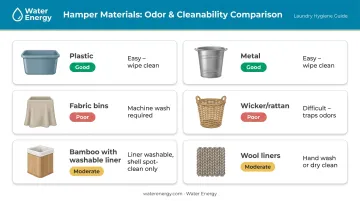
One note on bamboo: the antibacterial properties often marketed for bamboo products apply to raw, unprocessed bamboo fiber — not the finished materials used in most hampers. A 2013 study found natural bamboo fiber showed zero bacteriostatic activity against common pathogens. Choose bamboo for its breathability and aesthetics, not antimicrobial claims.
Even the best material choice hits a ceiling without adequate airflow. Ventilation design is what actually controls how quickly odors build.
Prioritize Ventilation Design
- Open-weave or slatted sides allow continuous air movement through the pile
- Lidded hampers need ventilation holes on the sides, not just at the top
- Solid bases trap moisture at the bottom and accelerate odor formation
If you're replacing a hamper, a ventilated plastic or slatted design with a washable fabric liner combines easy cleanability with airflow — a practical, low-maintenance pairing.
Frequently Asked Questions
Frequently Asked Questions
What is the best odor eliminator for a laundry basket?
Baking soda is the most effective natural option — it chemically neutralizes acidic odor compounds rather than masking them. For persistent odors, pair a baking soda pouch inside the basket with a periodic white vinegar wipe-down to tackle both airborne compounds and surface bacterial buildup.
How often should I clean my laundry basket?
Most households need a monthly deep-clean with a vinegar-water solution. Move to every two weeks if someone in the household plays sports, there are young children, or pets are in the mix — and wipe down anytime you spot a stain or smell between scheduled cleans.
Why does my laundry basket still smell after I empty it?
Residual odor comes from microbial biofilm built up on the basket's surfaces and seams — not leftover clothes. Odor-causing bacteria embed in the material and keep producing volatile compounds even after the laundry is gone. Scrubbing seams and interior surfaces with vinegar solution eliminates the source.
Can I use essential oils to deodorize a laundry hamper?
Essential oils add scent and have some antimicrobial activity, but they're not reliable as a standalone deodorizer at typical household dilutions. Use them alongside baking soda for best results, and avoid applying directly to plastic or wicker surfaces as they can degrade the material.
Does hamper material affect how quickly odors develop?
Yes, significantly. Non-porous materials like plastic and metal don't absorb moisture or odor compounds and are easy to sanitize. Porous materials like fabric bins and wicker trap moisture and bacteria in the material itself, requiring more frequent cleaning to prevent buildup.
How do I stop sweaty gym clothes from making the whole basket smell?
Air-dry gym clothes and towels completely before putting them in the basket — even 30–60 minutes on a hook makes a real difference. If that's not practical, keep a separate small ventilated bag specifically for high-odor items to prevent bacterial transfer to the rest of the laundry.