Fabric softener stains are more common than most people realize. They happen when undiluted softener contacts fabric directly, when dispensers clog and release at the wrong time, or when residue builds up inside the machine and re-deposits onto future loads.
This guide covers everything you need to fix the problem: why fabric softener causes stains in the first place, step-by-step removal methods for both clothes and machines, the mistakes that make stains worse, and practical strategies to prevent them going forward.
Key Takeaways
- Fabric softener stains appear as blue-gray, oily spots caused by undiluted softener contacting fabric directly
- Never put a stained garment in the dryer — heat bonds the stain permanently to fibers
- Pre-treat with dish soap, concentrated detergent, or rubbing alcohol, then rewash on the hottest safe cycle
- Machine stains require scrubbing the dispenser drawer and running a hot cleaning cycle
- Switching to dryer balls, white vinegar, or an ozone laundry system eliminates the staining risk entirely
Why Does Fabric Softener Stain Clothes and Machines?
Liquid fabric softeners contain cationic surfactants (quaternary ammonium compounds derived from fatty acids) that deposit onto fabric fibers to create a softening effect. When these compounds reach fabric in an undiluted or concentrated form, rather than evenly dispersed through rinse water, they leave behind oily, greasy deposits instead of a uniform coating.
What the Stains Look Like
According to University of Georgia Extension guidance, fabric softener stains appear blue-gray and greasy-looking. Maytag describes them as patches that look slick or shiny on the fabric surface. This distinguishes them from detergent stains, which typically appear white or powdery — useful for confirming what you're actually dealing with before treating.
Why the Stains Happen
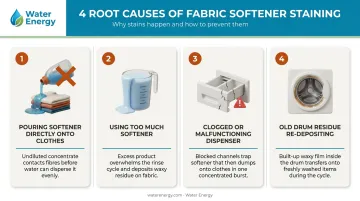
Four root causes account for most fabric softener staining:
- Pouring softener directly onto clothes instead of into the designated dispenser compartment
- Using too much for the load size, or filling past the MAX line on the dispenser
- A clogged or malfunctioning dispenser that releases softener during the wash cycle rather than the final rinse — LG confirms that overfilling or closing the drawer too forcefully can trigger early release
- Old residue inside the drum re-depositing onto new loads during future wash cycles
Cold storage can also thicken liquid softener. Downy notes their product may thicken after around 12 months or when kept in cold conditions, which makes uneven dispersion more likely. Cold wash water itself, however, is not a proven cause.
Clothes vs. Machine Stains
These are two different problems requiring two different fixes. Stains on clothes are the visible oily marks on fabric. Machine stains are caked residue in the dispenser drawer and drum that continuously re-deposit onto laundry, even after you've corrected your softener habits. Tackling both at the same time — clothes first, then the machine — is what stops the cycle from repeating.
How to Remove Fabric Softener Stains from Clothes
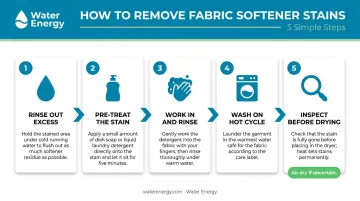
One rule applies before anything else: do not put the garment in the dryer. Maytag confirms that dryer heat sets oily stains, making them significantly harder — sometimes impossible — to remove. If you've already dried the garment, expect to repeat the treatment process two to three times.
Step 1: Rinse Out the Excess
Run the stained area under the hottest water the garment's care label allows. Rinse from the back of the fabric, pushing the stain outward rather than deeper into the fibers. Blot — don't rub — to lift loose residue without spreading it.
Step 2: Pre-Treat the Stain
Apply a grease-cutting agent directly to the stain and let it sit for 5–10 minutes:
- Concentrated liquid laundry detergent — directly supported by University of Georgia Extension for softener stains
- Dish soap (a few drops) — cuts grease effectively for fresh stains
- Rubbing alcohol — UGA specifically recommends this for remaining or stubborn softener stains
- Bar soap — UGA and the American Cleaning Institute both identify this for dampened softener stains
Step 3: Work In and Rinse
Gently massage the pre-treatment into the stain using your fingers or a soft brush. Rinse in cool water. For dried or heat-set stains, repeat this pre-treatment and rinse cycle two to three times before moving to the machine.
Step 4: Wash the Garment
Wash on the hottest cycle the care label permits, using a quality detergent with stain-fighting enzymes. For stubborn or already-dried stains, add an oxygen-based booster like OxiClean to the wash to break down remaining grease. Don't overload the machine — the garment needs room to rinse fully.
Step 5: Inspect Before Drying
Check the stained area in good lighting before moving the item to the dryer. If any greasy mark remains, go back to Step 2. When uncertain whether the stain is fully gone, air dry rather than machine dry — this avoids the risk of heat-setting any remaining residue.
How to Remove Fabric Softener Stains from Your Washing Machine
Softener residue accumulates in the dispenser drawer, drum, and internal components over time. It then re-deposits onto laundry during future cycles — so treating stained clothes without cleaning the machine first will just restart the problem.
Clean the Dispenser Drawer
- Remove the dispenser drawer if your model allows it
- Soak it in hot, soapy water for 15–20 minutes
- Scrub the softener compartment thoroughly with an old toothbrush, removing all caked or waxy residue
- Rinse completely and dry before reinserting
Do this monthly, or more frequently if you use softener regularly. LG documents that highly viscous softener can harden in dispenser drawers and fail to release properly — so even if you never see stains on clothes, this maintenance step protects dispenser function.
Clean the Drum
Wipe the inner drum with a cloth soaked in white vinegar or diluted concentrated laundry detergent, paying attention to visibly stained or discolored areas.
One caution: Consumer Reports warns that vinegar can damage rubber hoses and seals in some machines over time. Check your manufacturer's guidance before using it regularly inside the drum.
Run a Hot Cleaning Cycle
Run an empty hot water cycle — the hottest available setting, or a dedicated machine-clean program — using one of the following:
- A commercial washing machine cleaner tablet (Whirlpool recommends Affresh; Samsung supports its own Clean cycle)
- Two cups of white vinegar added directly to the drum
- A combination of baking soda and vinegar for odor alongside residue
Both Whirlpool and Samsung recommend running a cleaning cycle at least monthly — it reaches internal hoses and components that manual wiping can't.
Confirm the Fix
Run a test load with a few old items after cleaning. If staining continues, check whether the dispenser is releasing softener only during the final rinse — not earlier in the cycle. Persistent staining after a thorough clean may point to a dispenser valve issue that warrants a service call.
Common Mistakes That Make Fabric Softener Stains Worse
Avoid these three errors — they're the most reliable ways to turn a fixable stain into a permanent one:
Drying before the stain is gone. Heat bonds oily stain compounds to fabric fibers. The stain may appear to vanish when the garment is warm, then reappear once it cools — at which point it's set. Always air dry until you're certain the stain is fully removed.
Rubbing a fresh stain. Rubbing spreads the oily residue outward, enlarging the stain and pushing it deeper into the fabric weave. Blot first, and save any gentle circular motion for the pre-treatment step — not when the stain is still raw.
Treating clothes without cleaning the machine. If dispenser buildup or drum residue is the root cause, stains will return on the next wash cycle regardless of how thoroughly you treated the garment.
How to Prevent Fabric Softener Stains Going Forward
Fix Your Usage Habits First
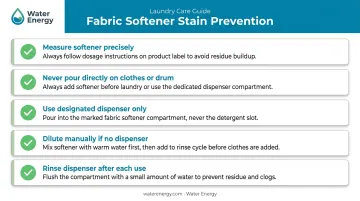
Most staining comes down to application errors. These corrections eliminate the majority of cases:
- Measure softener precisely — follow the bottle instructions for your load size
- Never pour liquid softener directly onto clothes or into the drum
- Use the designated dispenser compartment only
- If your machine has no built-in dispenser, dilute softener with ½ to 1 cup of warm water before adding manually, and only during the final rinse
- Rinse the dispenser compartment under hot water after each use to prevent buildup
Try Softener Alternatives
Two options soften clothes without any staining risk:
- White vinegar (½ cup in the rinse cycle) softens fabric by removing product residue rather than coating fibers (check your machine manufacturer's guidelines before using it regularly)
- Wool dryer balls soften mechanically by beating against clothing in the dryer, with no chemical coating. Good Housekeeping notes they don't reliably eliminate static, but they work well as a coating-free softening option
Consider Eliminating Fabric Softener Entirely
If you want to remove the staining problem at the source rather than manage it, ozone laundry systems offer a fundamentally different approach. Water Energy's GLS² Storm Deluxe is an ozone injection add-on system that connects to your existing washing machine. No new washer required, and installation takes about 30 minutes.
The Storm softens fabrics by stripping away chemical residue buildup from fibers rather than coating them with new compounds. As Water Energy's product documentation states: "Make towels softer and fluffier by eliminating chemical residues that stick to the fibers and dull your linen." The system also includes a permanent magnet water softener that reduces hard water mineral content, a secondary contributor to fabric stiffness.
Verified customers back this up:
"No more fabric softener for me. My sheets feel and smell amazing." — Nancy B., Jewett, TX (former fabric softener user)
"[My] towels were fluffier after switching." — Tami S., Jonesboro, AR
Water Energy recommends dropping fabric softener entirely to get the best results from the system. Fewer chemical residues on fabric also means fewer potential triggers for sensitive skin, which makes this a practical fix on more than one front.
Frequently Asked Questions
Are fabric softener stains on a washing machine permanent?
Rarely. Machine stains are typically waxy buildup that responds well to hot cleaning cycles, white vinegar, and dispenser scrubbing. Deep-set residue that's been accumulating for months may need two or three cleaning rounds before it's fully cleared.
Will OxiClean remove fabric softener stains on a washing machine?
OxiClean's Washing Machine Cleaner can help break down organic residue inside the drum during a hot cleaning cycle. For the dispenser and rubber gaskets, physically scrubbing with dish soap or diluted detergent is more effective at dissolving oily softener buildup.
Can you remove fabric softener stains after the clothes have already been dried?
Yes, but it requires extra effort. Pre-treat with rubbing alcohol or grease-cutting dish soap, work it in gently, then follow with hot wash cycles. Heat-set stains typically need the full treatment repeated two to three times before they lift completely.
Why is my washing machine leaving blue or greasy stains on clothes when I use fabric softener?
This is typically caused by a clogged dispenser releasing undiluted softener directly onto garments, or by old softener residue inside the drum re-depositing onto laundry. Cleaning the dispenser drawer thoroughly and running a hot machine cleaning cycle usually resolves it.
How do I stop fabric softener from spotting my clothes?
Use the correct measured amount for your load size, always add softener to the dispenser (never directly on clothes), and dilute with warm water if adding manually. Switching to wool dryer balls or an ozone laundry system like the GLS² Storm Deluxe removes the staining risk altogether.
What is the fastest way to remove a fresh fabric softener stain?
Rinse immediately from the back of the fabric under the hottest water the garment allows, then apply dish soap or concentrated detergent and let it sit five minutes before rinsing and rewashing. Acting before the garment goes in the dryer is the single biggest factor in easy removal.