
The frustrating part? Pod dissolution failures almost always trace back to a handful of specific, preventable causes. According to Tide's official FAQ on pod dissolution, incomplete dissolution typically means the pod wasn't fully submerged throughout the wash. That single insight points to where most problems start — and where the fixes begin.
This article walks through every major cause, what the warning signs look like, and how to prevent the problem for good.
Key Takeaways
- Place the pod at the back of an empty drum before loading clothes, not on top of laundry or in the dispenser drawer
- Overloaded machines restrict water circulation, trapping pods between fabric layers
- Quick-wash cycles often lack the water volume and agitation needed for full dissolution
- Humidity and heat degrade the pod film in storage, making it harder to dissolve in the wash
- Most dissolution problems are preventable with simple, consistent habits
Common Causes of Laundry Pods Not Dissolving
Laundry pods rely on a polyvinyl alcohol (PVA/PVOH) film that breaks down when it contacts water, agitation, and sufficient submersion time. Disrupt any of those conditions and you get partial or zero dissolution.
Incorrect Pod Placement
This is the most common cause — and the most avoidable. Placing a pod on top of loaded clothes, or dropping it into the detergent dispenser drawer, prevents it from receiving direct water contact when the cycle starts.
Every major brand gives the same instruction:
| Brand | Official instruction | Drawer warning? | |-------|---------------------|-----------------|\n| Tide | Empty drum, before clothes | Yes — explicitly prohibited | | Ariel | Back or bottom of drum, before clothes | No explicit prohibition | | Persil | Back of empty drum, before laundry | Yes — explicitly prohibited | | Gain | Bottom of drum, before clothes | No explicit prohibition |
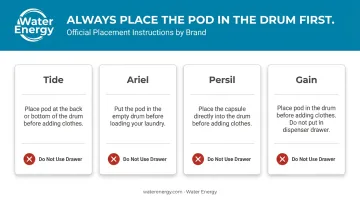
The dispenser drawer is designed for liquid or powder detergent — it doesn't deliver enough direct water flow to dissolve a pod's film. Persil notes that drum-first placement specifically prevents capsules from getting caught in clothing and leaving residue.
Symptoms of a placement problem: intact or partial pod shell found in the drum after the cycle, blue or green gel streaks on fabrics.
Water Temperature Too Cold
Most pods are formulated to dissolve across a range of temperatures — Tide states their PVA film is designed for cold water washing. The issue arises when extremely cold incoming water combines with a short cycle, leaving insufficient time for the film to fully break down.
In winter, tap water in many US regions can drop below 60°F — cold enough to slow PVA breakdown noticeably. Running a standard (not quick-wash) cycle gives the film more time to dissolve at these temperatures.
Symptom to watch for: cloudy or gummy residue on dark fabrics after a cold, short cycle.
Overloaded Washing Machine
Pack the drum too tightly and water can't circulate properly. A pod buried between layers of heavy towels or bedding may only partially contact water — dissolving unevenly and depositing concentrated detergent in one spot rather than distributing across the load.
Persil recommends leaving about 4 inches (roughly 10 cm) of space between the top of the laundry and the drum opening.
The fist test: If you can't comfortably fit your hand into the top of the loaded drum, the machine is overloaded.
Short or Quick-Wash Cycles
Quick-wash programs use less water and lower agitation than standard cycles. For lightly soiled small loads, they're fine. For full loads or bulky items, they often don't provide enough water contact time for the pod to fully dissolve and rinse out.
Pausing or canceling a cycle mid-wash creates the same problem — the pod may only be partially dissolved when the machine stops.
Poor Pod Storage and Damaged Film
The water-soluble film is sensitive to its environment before it ever reaches the washing machine. Exposure to humidity, heat, or direct sunlight can cause the film to harden, become sticky, or pre-dissolve slightly — making it harder to dissolve cleanly during the wash cycle.
Ariel's storage guidance is clear: keep pods in their original sealed packaging, handle them with completely dry hands, and never decant them into another container.
Tide echoes this — always reseal the container securely after each use.
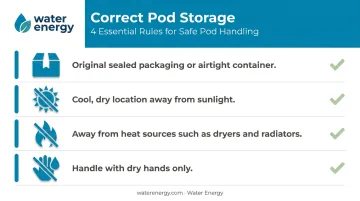
Correct storage checklist:
- Original sealed packaging or airtight container
- Cool, dry location away from sunlight
- Away from heat sources — dryers, dishwashers, radiators
- Handle with dry hands only
What Happens When Pods Don't Dissolve Properly
White or blue gel streaks on clothing, sticky residue patches, and a wasted pod of concentrated detergent — these are the immediate signs something went wrong. The downstream effects matter just as much.
Clothes with detergent residue trap more soil and odors over time, and fabrics can feel stiff or rough.
Persil specifically warns that affected items should be rinsed with warm water before going in the dryer, because heat can set the stain permanently and make it far harder to remove.
Residue also accumulates inside the machine itself, building up on the door gasket and drum walls if the underlying cause isn't addressed.
Warning Signs to Watch For
Catching these early prevents wasted product and fabric damage:
- Intact or partial pod shell found in the drum, on a garment, or under the door gasket after the cycle ends
- Visible streaks or sticky patches on clothes — blue or white gel marks that weren't present before washing
- Slippery or filmy buildup on the rubber door seal or inside the drum between wash cycles
How to Prevent Laundry Pods From Not Dissolving
Prevention comes down to four consistent habits around placement, load size, cycle selection, and storage. None require special tools or products.
Always Place the Pod First, at the Back of an Empty Drum
Before loading any laundry, place one pod at the back or bottom of the empty drum. Never in the dispenser drawer. Never on top of clothes.
Direct placement ensures the pod contacts water the moment the cycle begins — maximizing dissolution time and preventing it from being trapped under fabric.
Match Load Size to Machine Capacity
Leave at least 4 inches (about 10 cm) of space between the top of the laundry and the drum opening. If you can't fit your hand comfortably on top of the clothes, reduce the load.
Adequate space lets water circulate freely around the pod and throughout the entire load, allowing the film to dissolve and detergent to distribute evenly.
Avoid Quick-Wash Cycles for Large or Heavy Loads
Reserve quick-wash settings for small, lightly soiled loads only. Use standard or normal cycles for full loads, bedding, and towels.
Longer cycles deliver more water, more agitation, and more time for the pod to fully dissolve and rinse out — which cuts residue risk.
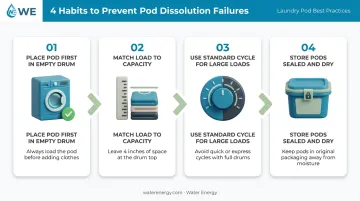
Store Pods Correctly to Protect the Film
Keep pods in their original sealed packaging or an airtight container. Store in a cool, dry place, away from heat sources and steam. Always handle with completely dry hands — moisture starts dissolving the film immediately on contact, even before the wash cycle begins.
Tips for Long-Term Prevention and Control
Apply these ongoing practices to eliminate recurring dissolution issues:
- Check the drum and door gasket monthly for trapped pod fragments or residue buildup. Wipe clean with a damp cloth before residue has a chance to build up.
- Run a monthly drum-cleaning cycle with hot water and an empty machine to clear residual film or gel from gasket and drum walls
- Consider your water hardness — if dissolution problems persist despite correct usage, Ariel notes that hard water (high in calcium and magnesium) can affect cleaning performance, and some pod formulations handle it better than others
- Reduce overall detergent dependency — systems like Water Energy's GLS² Storm Deluxe use ozone technology to clean effectively in cold water with up to 75% less detergent, reducing how often pods are needed and cutting residue risk overall.
Conclusion
Pod dissolution failures aren't random. Placement errors, cold water combined with short cycles, overloaded drums, and degraded film from poor storage — each cause is identifiable and preventable. The fixes are straightforward: put the pod in first, don't overfill the machine, use the right cycle for the load size, and store pods properly.
Catching the warning signs early — gel residue on clothes, film buildup on the gasket — protects your fabrics, prevents wasted detergent, and keeps your machine clean. Once you've addressed the root cause, the problem typically doesn't come back. And if you're looking to reduce your reliance on pods and chemical detergents altogether, cold-water ozone washing is worth exploring — it cleans without the dissolution variables that cause these headaches in the first place.
Frequently Asked Questions
Why are my laundry pods not dissolving and sticking to my clothes?
Pods typically stick when placed on top of loaded laundry instead of at the back of an empty drum, or when the machine is overloaded. Both situations prevent the pod from receiving enough direct water contact to dissolve before it contacts fabrics.
How long does it take for laundry pods to dissolve?
A correctly placed pod begins dissolving within the first few minutes of a cycle, with full dissolution occurring during the main wash phase. Cold water, overloading, or short cycles can slow or prevent complete dissolution.
Can you put laundry pods in the detergent dispenser drawer?
No. Tide and Persil both explicitly warn against placing pods in the dispenser drawer. It's designed for liquid or powder detergent, not pods — water flow there is too limited to dissolve the film, which leads to clogging or residue buildup.
Do laundry pods dissolve in cold water?
Most modern pods are formulated to dissolve at lower temperatures. However, extremely cold incoming water combined with a short cycle can still prevent full dissolution — placing the pod correctly and using a full-length cycle helps compensate.
What should I do if a pod didn't dissolve and left residue on my clothes?
Don't put affected items in the dryer — heat can set the stain permanently. Gently rub any visible gel patches with warm water, then rewash the load without adding detergent using warm water and a full-length cycle.
Why do laundry pods not dissolve in front-load washers?
Front-load HE machines use less water and can trap pods in the door seal or between tightly packed fabrics. Placing the pod at the very back of the empty drum before loading and avoiding overloading are the primary fixes for front-loaders.