Most gym clothes are made from synthetic performance fabrics — polyester, spandex, nylon, and elastane — that behave completely differently from cotton under heat. The wrong temperature doesn't just leave odors behind; it permanently degrades the fibers that give athletic wear its stretch, compression, and moisture-wicking capability.
This guide covers the correct water temperature for gym clothes, a step-by-step cold-water washing method, the variables that separate a truly clean wash from one that still smells, and how to fix clothes that survive the cycle still stinking.
Key Takeaways
- Cold water (60°F or below) is the right choice for virtually all synthetic activewear
- Turn clothes inside out and skip fabric softener entirely — every single time
- Wash after every use — damp clothes sealed in a bag breed bacteria within hours
- Air dry whenever possible — dryer heat is the fastest way to destroy elastane and spandex
- Persistent post-wash odor usually means bacteria or detergent buildup, not a temperature problem
How to Wash Gym Clothes in Cold Water: Step-by-Step
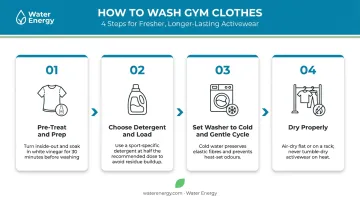
This method works for the majority of synthetic activewear — polyester, spandex, nylon, and elastane blends. Follow each step in order for the best result in both cleanliness and fabric longevity.
Step 1: Pre-Treat and Prep Before Loading the Machine
Turn every piece inside out before it goes in the washer. The interior surface absorbs the most sweat, body oils, and bacteria — flipping garments ensures the detergent and wash water reach the dirtiest areas directly.
Close all zippers, clasps, and hooks to prevent snagging during agitation. Place delicate items like sports bras or padded pieces in a mesh laundry bag for protection.
For heavily soiled or persistently odorous items, Nike recommends a pre-soak of 20–30 minutes in one part distilled white vinegar to four parts cold water. The vinegar's acidity helps break down sweat residue before the wash cycle begins. This is brand care guidance rather than a clinically validated sanitizer, but it's a useful starting point for stubborn odors.
Step 2: Choose the Right Detergent and Load the Machine
Use a detergent formulated for athletic wear or one labeled for delicates and performance fabrics. These are engineered to rinse out completely from synthetic fibers. Standard detergents often leave residue in polyester that becomes a slow-building odor problem over several washes.
Use less than you think you need. Nike specifically advises using slightly less detergent than a normal load. One to two tablespoons is typically sufficient. Excess detergent builds up in synthetic fabric and harbors bacteria rather than cleaning them away.
Do not add fabric softener. It coats synthetic fibers with a waxy residue that clogs moisture-wicking channels and compounds odor problems over time — lululemon, ASICS, and Nike all agree on this point.
Step 3: Set the Washer to Cold Water and a Gentle Cycle
Select cold water and a gentle or express cycle. Short cycle duration is advantageous here: polyester releases dirt quickly and doesn't benefit from prolonged agitation, which causes pilling and breaks down fabric structure over time.
Don't overload the drum. Gym clothes need room for water and detergent to circulate freely — a cramped load reduces cleaning effectiveness and increases friction that degrades fabric.
Step 4: Dry Properly
- Remove clothes immediately when the cycle ends — leaving damp clothes in the drum promotes mildew growth
- Hang on a drying rack or clothesline to air dry — synthetic fabrics dry quickly and retain elasticity best away from heat
- If using a dryer, set it to the lowest heat setting or an air/tumble-only cycle
- Never use high heat — elastane and spandex break down permanently under high dryer temperatures, causing sagging and loss of compression support
Hot, Warm, or Cold Water: Which Temperature Is Right?
Different sources give conflicting advice, and the right answer does depend on fabric type and soil level. Here's how to think through it.
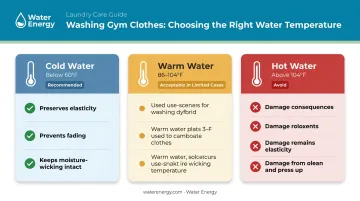
Cold Water (Recommended for Most Synthetic Gym Clothes)
Cold water — below 60°F by common guidance, or up to 86°F per the FTC's official definition — is the standard recommendation for polyester, spandex, nylon, and elastane. It preserves elasticity, prevents color fading, and keeps moisture-wicking properties intact. Nike, lululemon, and ASICS all direct consumers here as the default.
Cold water doesn't reduce cleaning effectiveness when paired with the right detergent. The American Cleaning Institute notes that modern detergent enzymes can work effectively in cold water — many sports detergents are specifically formulated to activate and rinse at these temperatures.
Warm Water (Acceptable in Specific Situations)
Warm water (roughly 86–104°F) can help activate enzyme-based detergents and oxygen bleach more effectively. It may be a reasonable choice for:
- Cotton-blend gym clothes (not fully synthetic)
- Heavily soiled items where odor bacteria are deeply embedded
- Items explicitly labeled as warm-wash safe on their care tag
Limit warm washes to those cases. Repeated warm washing accelerates fiber degradation even in blended fabrics.
Hot Water (Avoid for Gym Clothes)
Hot water above 104°F damages virtually all synthetic performance fabrics. The consequences are cumulative and often permanent:
- Breaks down spandex and elastane, destroying compression
- Causes shrinkage and shape distortion
- Accelerates color fading
- Reduces stretch permanently
Hot water is only appropriate for cotton-only gym towels — not the technical activewear itself.
Reading the Care Label
When in doubt, the care label wins. GINETEX's international care symbols use a wash tub with a number inside indicating the maximum temperature in Celsius. Canada's consumer guide maps wash tub dots to temperature:
- 1 dot = 30°C (cold)
- 2 dots = 40°C (warm)
- 3 dots = 50°C (hot)
A bar underneath the tub means reduced mechanical action; two bars mean very mild action — both common on synthetic activewear labels. If your label has worn off, default to cold water and a gentle cycle.
Key Factors That Affect How Clean Your Gym Clothes Actually Get
Water temperature is one variable. Getting all of them right is what separates clothes that come out truly clean from those that still smell.
Detergent Type and Quantity
Sports detergents contain enzymes and surfactants chosen specifically to break down the oily sweat compounds that synthetic fabrics trap. Standard detergents often fail to fully rinse out of polyester, leaving a residue layer that makes subsequent odors worse over time.
Too much detergent is nearly as problematic as the wrong type. The excess suds don't rinse out in a single cycle and leave buildup that harbors bacteria. Less is more with gym clothes.
Wash Cycle Agitation Level
High agitation cycles cause pilling, stretch out elastic waistbands, and degrade the seams on compression garments. The physical beating is often more damaging to performance fabric than temperature alone. A gentle or express cycle balances adequate cleaning action with reduced fabric stress. Mesh laundry bags cushion delicate pieces further.
Drying Method and Heat Exposure
Dryer heat is the single fastest way to destroy spandex and elastane, the elastic fibers responsible for compression, shape retention, and fit. Major performance brands consistently recommend air drying for this reason:
- Nike warns that high dryer heat weakens elastic and causes shrinkage
- lululemon cites dryer heat as a primary cause of altered garment shape
- ASICS specifically flags protecting "LYCRA fiber life and garment shape" as the rationale for air drying
Air drying consistently extends performance fabric life across all three brands' care guidelines.
When Standard Methods Aren't Enough
For households dealing with persistent gym odors, ozone laundry technology addresses the problem at the source. Water Energy's Storm system — built on technology originally developed with NASA for cleaning Space Shuttle components — infuses cold wash water with dissolved ozone at 0.8 to 1.6 parts per million. Ozone is a powerful oxidizing agent that eliminates odor-causing bacteria including Staphylococcus (one of the primary culprits in gym clothing odor) without heat or additional chemicals. The system also reduces detergent use by up to 75%, which directly addresses the buildup problem that plagues synthetic fabrics over time.
Why Gym Clothes Still Smell After Washing (And How to Fix It)
Persistent post-wash odor traces back to one of two causes. Either bacteria survived the cycle by embedding deep in synthetic fibers, or detergent and softener buildup has accumulated over many washes and is itself harboring odor-causing microbes.
A 2014 study of 26 participants found that polyester shirts smelled significantly more intense and less pleasant than cotton after exercise — and that Micrococcus bacteria were specifically enriched on polyester. This is a fiber-microbe interaction, not just an insufficient-cleaning problem. Synthetic fabrics have an affinity for the hydrophobic compounds in sweat that trap odor, which is why the issue often persists despite normal washing.
Fixes to try, in order:
- Vinegar pre-soak — 20–30 minutes in one part white vinegar to four parts cold water before the next wash
- Switch detergents — move to an enzyme-based formula or add oxygen bleach, which is color-safe and specifically effective at dissolving oily sweat compounds
- Use less detergent — reduce to one tablespoon per load to stop adding to buildup
- Clean your machine — a dirty washer drum recontaminates every load that goes through it
- Eliminate fabric softener entirely if you haven't already
If those fixes don't resolve the problem, the issue is likely structural — synthetic fibers holding onto bacteria faster than a standard wash cycle can clear them. For households with heavy activewear loads or athletes washing daily, ozone laundry systems offer a more systematic solution. Water Energy's Storm infuses cold water with dissolved ozone, which oxidizes odor compounds and kills bacteria — including Staph, the species specifically linked to gym clothing odor — on contact. No heat required, which matters because cold water is safer for the synthetic fabrics that trap odors most stubbornly.
Common Mistakes That Damage Gym Clothes in the Wash
Avoid these, and most gym clothing problems disappear:
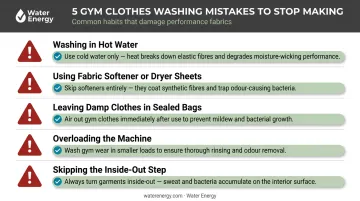
- Washing in hot water — many people assume hotter means cleaner; cold water with the right detergent cleans synthetic fabrics just as effectively while preserving their stretch and structure
- Using fabric softener or dryer sheets — these coat synthetic fibers, block moisture-wicking channels, and trap more bacteria with every subsequent wear; skip them entirely for activewear
- Leaving gym clothes damp in a sealed bag or hamper — the sealed environment breeds the persistent musty odor that survives a normal wash cycle; hang them to air out until you're ready to wash
- Overloading the machine — reduces how effectively water and detergent reach the fabric's high-contact areas
- Skipping the inside-out step — turning clothes inside out exposes the sweat-contact surface directly to water and detergent, where it matters most
Conclusion
Cold water is the right choice for washing virtually all synthetic gym clothes. It cleans effectively when paired with the right detergent, and it protects the fabrics, elasticity, and performance properties that hot water degrades over time.
Most failed washes — persistent odors, stretched-out waistbands, shrinkage — trace back to avoidable mistakes: wrong water temperature, wrong detergent, fabric softener, or too much dryer heat. Getting these variables right keeps activewear performing and smelling fresh for far longer than most people expect.
If you want to take cold-water washing further, ozone laundry systems like Water Energy's Storm work by infusing ozone directly into cold water — eliminating persistent odors, reducing detergent use, and extending the life of performance fabrics without the heat that breaks them down.
Frequently Asked Questions
Is it okay to wash gym clothes with regular clothes?
It's better to separate them. Zippers and buttons on regular clothes create abrasion that damages performance fabrics during agitation, and activewear needs cold water and a gentle cycle that most other garments don't require.
What temperature should I wash gym clothes?
Cold water — 60°F or below — is the standard recommendation for synthetic activewear (polyester, spandex, nylon, elastane). Warm water is acceptable for cotton-blend gym items or when using oxygen bleach, but hot water should be avoided for all performance fabrics without exception.
Can hot water shrink gym clothes?
Yes. Hot water can cause gym clothes to shrink and warp, particularly items with spandex or elastane content. Beyond shrinkage, heat also permanently reduces stretch, compression, and moisture-wicking capability.
How often should I wash gym clothes?
After every single use. Sweat, body oils, and bacteria accumulate rapidly on synthetic fabrics. If immediate washing isn't possible, hang the clothes to air out — sealed bags and hampers let bacteria multiply fast in the damp, enclosed space.
Why do my gym clothes still smell after washing?
Persistent odor usually means bacteria survived the wash cycle or detergent and softener residue has built up over time. To fix it:
- Pre-soak in white vinegar before washing
- Switch to an enzyme-based detergent
- Use less detergent than the label suggests
- Stop using fabric softener entirely
Should I use fabric softener on workout clothes?
No. Fabric softener coats synthetic fibers with a waxy residue that blocks moisture-wicking channels, traps bacteria, and worsens odor — the opposite of what performance fabrics are designed to do. Dryer sheets have the same effect and should be skipped as well.