This guide covers the most effective sanitization methods, when each is appropriate, what determines results, and the mistakes that undermine the whole process.
Key Takeaways
- Regular detergent alone won't kill 99.9% of bacteria and pathogens; sanitizing closes that gap
- Hot sanitize cycles suit sturdy cottons and bedding; ozone and chemical methods work for heat-sensitive fabrics
- Reserve sanitization for illness recovery, high-germ items, baby linens, and immunocompromised household members
- Overusing sanitize cycles damages elastic, fades colors, and wears fabric faster
- Always check care labels before choosing a method
How to Sanitize Laundry: Methods That Actually Work
Use the Washer's Sanitize Cycle
The sanitize cycle raises water temperature far higher than a standard hot wash and extends both wash and rinse phases. Samsung's sanitize cycle, for example, heats water to 150°F for heavily soiled, colorfast items. Whirlpool lists an average cycle time of 120 minutes — roughly twice a normal wash. That combination of heat and extended exposure is what kills bacteria, not just the temperature alone.
NSF Protocol P172 requires residential washers certified for sanitizing to achieve a 99.9% reduction in microorganisms with no measurable carryover to subsequent loads.
Best suited for:
- Sturdy, colorfast cottons and linens
- Bath towels and bedding
- Heavily used household items that can handle high heat
Do not use on:
- Wool, silk, or delicates
- Spandex and elastic-heavy items
- Anything labeled "cold wash only"
Heat damage from a sanitize cycle is irreversible. Shrunken items, faded dye, and degraded elastic don't recover. Check every care label before starting the cycle.
Add a Laundry Sanitizer Product
EPA-registered laundry sanitizers kill bacteria at lower temperatures than a sanitize cycle, making them the right choice for items that can't handle high heat. These are antimicrobial pesticides regulated under FIFRA, not the same as detergent, which only removes dirt and soil.
Two main options:
- Chlorine bleach — effective for whites and colorfast items; a 2022 review confirmed stronger viral reductions from bleach than detergent alone at low temperatures
- Non-bleach sanitizer products (such as Lysol Laundry Sanitizer, EPA Reg. No. 777-128) — suitable for colors and more delicate items; the labeled claim covers 99.9% reduction of S. aureus and K. pneumoniae at temperatures as low as 21°C/70°F, using 100 mL in HE machines with a 16-minute contact time in the rinse cycle
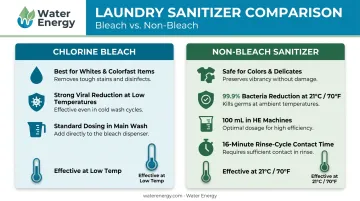
Dose, placement, contact time, and temperature all matter. Using too little product or adding it at the wrong stage means you're not actually sanitizing — you're just adding liquid to your laundry.
Detergent and sanitizer work together. Detergent removes soil; the sanitizer kills germs. Soil left on fabric can physically shield bacteria from chemical agents, so both steps are needed.
Use High Heat in the Dryer
A dryer's sanitize setting uses elevated heat for an extended cycle. NSF Protocol P154 certifies residential dryers that achieve 99.9% microbial reduction, but P154 evaluates dryer performance after washing. The dryer sanitize setting is not a substitute for laundering.
Use dryer heat as a complement to washing, not a replacement. It's most useful for items that can't be wet-washed but tolerate heat — certain stuffed animals, some pillows (not down-filled), and similar fabric items.
Heavy soil must be removed by washing first. Soil creates a physical barrier that prevents heat from reaching bacteria at all.
Ozone Laundry Sanitization
Ozone (O₃) is a powerful oxidizer that destroys bacteria, viruses, and spores on contact, and it works without hot water. Dissolved ozone infuses directly into wash water, delivering sanitization through chemistry rather than heat.
This approach suits households with allergy sufferers, sensitive skin, or young children — anywhere regular sanitization is needed but heat cycles would wear fabrics down. It's also the right fit for delicate items that can't tolerate a sanitize cycle at all.
Note: Published ozone research is largely laboratory or institutional in scope. For residential systems, look for products with documented performance data specific to their design.
When Should You Sanitize Your Laundry?
Not every load needs sanitization. Targeting the right situations is what makes it effective — and avoids unnecessary fabric wear.
Sanitize when:
- Someone in the house is sick — bedding, towels, and worn clothing should be sanitized during and after a contagious illness. Influenza A and B have been recovered from cloth surfaces for up to 8–12 hours, and the CDC recommends the hottest appropriate cycle
- High-contact items like gym clothes, bath towels, cloth diapers, underwear, and pet bedding harbor heavy bacterial loads even when they look clean
- You're washing for a newborn or someone with a compromised immune system, where consistent sanitization provides a meaningful safety margin
Don't sanitize every load:
Everyday clothing with normal soil doesn't need it. Routine overuse:
- Accelerates fabric wear and degrades elastic fibers
- Fades color over time
- Drives up energy costs unnecessarily
Good detergent and a standard cycle handle normal laundry fine.
Key Factors That Affect Sanitization Results
Temperature and Exposure Time
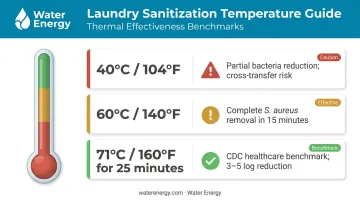
Heat alone doesn't sanitize — duration matters equally. CDC healthcare guidance references 71°C (160°F) for 25 minutes as a conventional hot-water laundering benchmark. Research on healthcare textiles found a 3–5 log reduction of E. faecium at 60–70°C over a median of 15 minutes. That extended time is doing real work — a 60°C (140°F) wash achieved complete S. aureus removal in controlled testing, while a 40°C (104°F) wash produced only partial reduction with cross-transfer still observed.
Load Size and Water-to-Fabric Ratio
An overloaded washer prevents water, heat, or sanitizing agents from reaching all fabric surfaces evenly. For sanitize loads, avoid packing the drum — items need room for full water and agent contact throughout the cycle. Check your machine's manual for model-specific guidance; there is no universal drum-fill percentage that applies across all washers.
Sanitizing Agent Type and Dosing
The right product at the right dose is non-negotiable. Key rules to follow:
- Use only EPA-registered sanitizers approved for laundry applications
- Follow label dosing exactly — more product does not mean more germ-killing
- Match the sanitizer to the specific organisms, contact times, and temperatures listed
- Deviating from any labeled condition means the pathogen-reduction claim no longer applies
Common Mistakes When Sanitizing Laundry
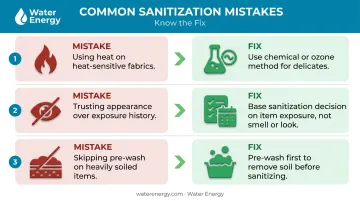
Three mistakes account for most failed sanitizing attempts:
Using heat on heat-sensitive fabrics. Running a sanitize cycle on delicates causes irreversible damage — shrunken items, faded colors, collapsed elastic. If a label says cold wash or delicate, use a chemical sanitizer or ozone-based method instead.
Trusting appearance over exposure history. A freshly washed pillowcase from a sick person's bed can still carry bacteria. A clean-smelling gym towel can carry a heavy bacterial load. Base the decision to sanitize on what an item was exposed to, not how it looks or smells.
Skipping a pre-wash on heavily soiled items. High soil levels physically shield bacteria from heat and chemical agents. A heavily soiled load fed directly into a sanitize cycle may not be sanitized at all — pre-washing first is what makes the difference.
Frequently Asked Questions
What is the sanitize cycle on a washing machine?
It's a specialized wash program that raises water temperature significantly above a standard hot cycle — Samsung's, for example, reaches 150°F — and extends the cycle time to ensure adequate heat exposure. NSF P172 requires certified washers to achieve a 99.9% reduction in microorganisms with no carryover to later loads.
When should I use the sanitize cycle on my washing machine?
Use it when a household member has been sick, for heavily used items like towels and bedding, for baby or immunocompromised household linens, and for gym clothes or cloth diapers. It's not necessary for routine laundry with normal soil levels.
Is the sanitize cycle worth it?
Yes, for the right items and situations. It's highly effective when genuine pathogen risk exists. The trade-offs — longer cycle time, higher energy use, and accelerated fabric wear — make it the wrong choice for everyday loads or heat-sensitive items.
Do you use detergent on the sanitize cycle?
Yes. Detergent removes dirt and soil while the cycle's heat kills germs — both work together. Skipping detergent means soil may remain on the fabric, and soil can shield bacteria from heat, reducing sanitization effectiveness.
Can you sanitize laundry without a sanitize cycle?
Yes. EPA-registered laundry sanitizer products added at the rinse cycle, high dryer heat after washing, and ozone-based systems like the Water Energy Storm all sanitize effectively. These are solid alternatives for machines without a sanitize cycle or for delicate fabrics that can't tolerate high heat.
Is the sanitize cycle safe for all fabrics?
No. Delicates, wool, spandex, elastic-heavy garments, and anything labeled cold wash only should not go through a high-heat sanitize cycle. Sturdy cottons, linens, and towels are the most suitable candidates.