This article covers every reason sheets can develop a bleach-like smell, walks through proven removal methods, and explains how to prevent the problem from coming back.
Key Takeaways
- Sheets can smell like bleach even without bleach being used — tap water chlorine reacts with sweat proteins to form chloramine compounds
- Hard water reduces detergency and can promote mineral deposits in fabric, making full rinsing harder
- Baking soda and a corrective rewash resolve most cases
- Never mix vinegar and bleach — use them in separate wash cycles only
- Air drying in sunlight helps, but claims that dryer heat "sets" chemical odors lack scientific backing — complete corrective treatment before drying
- Persistent smell after three washes is a sign the sheets need replacing
Why Do Sheets Smell Like Bleach?
Unlike clothing worn for a few hours, sheets absorb body oils, sweat, and skin cells over multiple nights. That buildup creates the conditions for chemical odor reactions during laundering — sometimes even when no bleach goes near the machine.
You Used Too Much Bleach (or Added It Undiluted)
Bleach is highly concentrated. Clorox's current instructions specify 1/3 cup of Clorox Disinfecting Bleach for a normal-soil load in a standard washer — diluted in 1 quart of water and added 5 minutes after the cycle starts, not directly onto fabric.
Exceed that amount and the washing machine simply cannot rinse it all out. Residue stays embedded in the fibers and releases as a sharp bleach smell, particularly after heat from the dryer.
The Sheets Weren't Rinsed Thoroughly
An overloaded drum, a shortened cycle, or a weak rinse setting can leave chlorine trapped in fabric — especially in thicker bedding like flannel or high thread-count cotton. The residual smell becomes more noticeable as sheets warm up in the dryer or against your body in bed.
Hard Water Is Reducing Rinsing Effectiveness
Hard water — classified by the USGS as water above 120 mg/L as calcium carbonate — is prevalent across the east-central and western United States. Research shows that calcium already present in fabric reduces detergency, and mineral precipitates can build up in cotton washed repeatedly in hard water with certain detergents.
The net effect is real regardless: mineral buildup in fabric makes thorough rinsing harder, so chlorine residue is more likely to linger after each wash.
Your Body Chemistry Is Reacting with Tap Water Chlorine
Many people don't realize this can happen without any bleach added to the wash.
Municipal tap water contains chlorine as a disinfectant. The EPA's maximum residual disinfectant level is 4.0 mg/L for chlorine — a regulatory ceiling, though actual tap concentrations tend to be lower. That chlorine is present in every wash cycle.
When sheets saturated with sweat, skin oils, and body proteins hit that chlorinated water, the nitrogen compounds react with free chlorine to form chloramines — compounds with a pungent, chlorine-like odor. The CDC notes that chlorine binds with body waste such as sweat and urine to form chloramines with a "distinctive chloramine odor." That's the pool smell — and it can happen in your washing machine too.
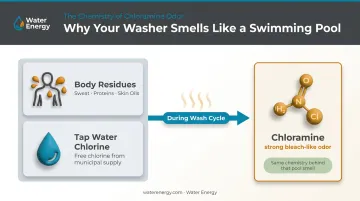
The most common sources of nitrogen compounds that trigger this reaction include:
- Sweat absorbed over multiple nights of use
- Skin oils and shed skin cells
- Body proteins from natural perspiration
- Residual personal care products like lotions or body wash
Bleach Residue in the Washing Machine Itself
Front-loaders especially accumulate bleach residue in the detergent drawer, drum seals, and drum lining — residue that transfers to sheets even on bleach-free cycles. If the smell appears consistently regardless of what you add to the wash, the machine itself may be the source.
How to Remove Bleach Smell from Sheets: Step-by-Step
The goal is to neutralize or rinse out the chemical compounds causing the smell, not mask them. Work through these methods in order, starting with the least intensive.
Method 1: Rewash with Detergent and an Extra Rinse Cycle
Run a full wash cycle with a standard amount of detergent only (no bleach, no additives). Add an extra rinse cycle at the end. This resolves the smell in many cases where simple residue buildup is the cause, and it's always the right first step.
Method 2: Baking Soda Soak
Baking soda (sodium bicarbonate) is amphoteric, meaning it can neutralize both acidic and alkaline odor compounds. The American Chemical Society points to it as an effective deodorizer.
How to do it:
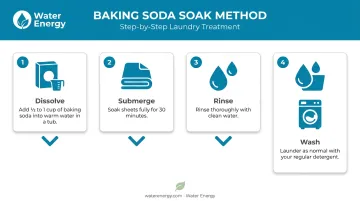
- Dissolve ½ to 1 cup of baking soda in a sink or tub of warm water
- Submerge sheets fully and soak for 30 minutes
- Rinse thoroughly
- Wash normally with detergent
Arm & Hammer recommends ½ cup added directly to a wash load for perspiration odors, with up to 1 cup for heavier odors.
Method 3: White Vinegar Rinse
White vinegar is mildly acidic and may help break down alkaline residue compounds. Add ½ to 1 cup of white vinegar to the fabric softener compartment so it releases during the rinse cycle.
Critical safety point: Never use vinegar in the same cycle as bleach or possible bleach residue. The CDC confirms that mixing bleach with acid can generate chlorine gas. Only use vinegar after all bleach has been fully rinsed out, ideally after a plain detergent wash first. Vinegar smell dissipates fully as sheets dry.
Note: No authoritative textile source has confirmed that vinegar definitively removes chlorine odor from fabric. Clorox's own guidance for lingering bleach smell uses an oxygen-bleach presoak and rewash rather than vinegar. Use it as a supplementary step, not a guaranteed fix.
Method 4: Lemon Juice Treatment
Citric acid in lemon juice neutralizes alkaline bleach compounds.
How to do it:
- Add ¼ cup of lemon juice directly to the wash cycle, or
- Mix with water in a spray bottle and apply to sheets before washing
Works best for mild odors and can also brighten whites.
Method 5: Air Dry Outside
Hanging sheets outside in fresh air and sunlight allows volatile compounds to dissipate naturally. Research shows sunlight can reduce microbial contamination on textiles, and a 2020 study attributed line-dried laundry's fresh scent to a combination of sunlight, wet fabric, and atmospheric chemistry.
One caveat: there's no strong scientific evidence that dryer heat permanently "sets" chlorine odor into fabric, so this isn't a mandatory substitution. It works well as a final step after any corrective treatment.
Method 6: Clean the Washing Machine
If the smell persists across multiple loads, the machine is likely the source.
How to clean it:
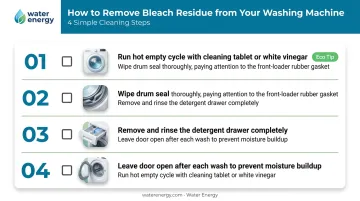
- Run a hot empty cycle with a machine-cleaning tablet or a cup of white vinegar
- Wipe down the drum seal thoroughly (front-loaders accumulate residue in the rubber gasket)
- Remove and rinse the detergent drawer
- Leave the door open after each wash to prevent moisture buildup
When to Rewash vs. When to Replace Your Sheets
Not every case of bleach smell warrants continued corrective washing. Here's how to decide:
Rewash if:
- The smell appeared after a single high-bleach wash
- The sheets are otherwise in good condition
- The odor diminishes (even partially) after one corrective wash — this indicates surface residue, not structural damage
Replace if:
- Sheets have been washed repeatedly with bleach over many months
- The fabric is visibly thin, discolored, or weakened
- The smell persists through three or more corrective wash cycles — at that point, the fiber structure itself has been compromised
On timing: Good Housekeeping reported in 2025 that most experts recommend replacing sheets every 2 to 3 years, though material quality, rotation habits, and visible wear all affect that timeline. For reference, Wirecutter's recommended queen-size sheet set runs around $60. If your sheets are near the end of that price range and have been through multiple corrective washes with no improvement, replacement is the more practical call.
Common Mistakes That Make the Bleach Smell Worse
Some common fixes actually make things worse. Avoid these:
- Adding more bleach to "clean out" the smell increases chemical concentration in the fabric and makes thorough rinsing even harder.
- Running bleach-smelling sheets through the dryer locks in the odor. Complete all corrective treatments before drying.
- Mixing bleach with vinegar to neutralize it is dangerous. Poison Control confirms that combining bleach with any acid — including vinegar — can produce chlorine gas. If you use a vinegar rinse, it must happen in a completely separate cycle after all bleach has been removed.
How to Prevent Bleach Smell in the Future
Use Bleach Correctly — or Not at All
A few simple habits go a long way:
- Stick to 1/3 cup of concentrated bleach per standard load, always diluted
- Add an extra rinse cycle any time bleach is used on bedding
- For most household sheet washing, detergent alone handles the job — bleach may not be necessary at all
Address Hard Water at the Source
If hard water is contributing to poor rinsing and mineral buildup in your sheets, a water softening product added to the wash helps. For a more comprehensive fix, ozone-based laundry systems like the Storm by Water Energy replace chlorine bleach entirely, using dissolved ozone to handle sanitizing. The technology traces back to Water Energy's work on NASA's Space Shuttle Program.
Because the system cuts overall chemical input by up to 75%, there's far less residue left in fabric fibers after each wash. Water Energy's customer Nancy B. put it simply: "My sheets feel and smell amazing."
Wash Sheets More Frequently
Washing sheets more often — ideally every one to two weeks — reduces the buildup of body oils, sweat, and skin proteins that react with tap water chlorine to form chloramine odors. Less organic residue on the fabric means less chemical reaction during washing. Cooler, shorter cycles preserve fabric integrity while still removing the buildup effectively.
Frequently Asked Questions
Why do my sheets still smell like bleach after washing?
The smell persists because bleach residue remains trapped in fabric fibers after an insufficient rinse, or because tap water chlorine has reacted with sweat proteins to form chloramine compounds. Both causes require a corrective rewash. Try the baking soda soak method followed by a plain detergent wash with an extra rinse cycle.
What smells like bleach but isn't bleach?
Chloramines — formed when chlorine in tap water reacts with sweat, skin oils, and urea — produce a sharp, chlorine-like odor. This is why sheets can smell strongly of bleach even when none was used. It's the same reaction behind the distinctive smell of a public swimming pool.
Is it safe to sleep on sheets that smell like bleach?
Mild, occasional bleach odor from residue is unlikely to cause serious harm for most people. However, a persistent or strong bleach smell indicates chemical residue that can irritate sensitive skin or airways — particularly for people with chemical sensitivities. Rewash the sheets before use.
How much bleach should you use when washing sheets?
Clorox recommends 1/3 cup of Clorox Disinfecting Bleach for a normal-soil load in a standard washer, always diluted in water before contact with fabric. Less is more — using too much makes complete rinsing impossible and is the primary cause of residual bleach odor.
Can hard water make sheets smell like bleach?
Hard water minerals reduce detergency and cause buildup in fabric fibers, making thorough rinsing harder and leaving more chemical residue behind. Adding a water softening agent to the wash helps, and cutting back on bleach use addresses the problem at its source.
How do I get rid of bleach smell without rewashing?
Hang sheets outside in fresh air and direct sunlight for several hours. Sunlight sanitizes textiles naturally, and outdoor air lets volatile compounds dissipate. This works best for mild odors, but a full corrective rewash remains the most reliable solution.