
Get it wrong consistently and the consequences compound: towels go scratchy, colors fade faster than they should, odors linger despite washing, and skin reacts to residues you can't see. Most households experience at least one of these problems without ever connecting it to the wash cycle chemistry.
This guide explains what pH actually does in the laundry process, why the balance matters more than most detergent labels suggest, and what you can do to get consistently better results.
Key Takeaways
- Most laundry detergents sit between pH 8–12 (alkaline) — effective on grease, but harsh on delicate fibers and skin when residue builds up
- High-pH detergent residue disrupts skin's natural acid mantle (pH 4.5–5.5), contributing to dryness, rashes, and irritation
- Match detergent pH to your load type: alkaline for greasy or heavily soiled items, neutral for delicates and everyday wear
- Less rinse water raises detergent residue by roughly 30% — dose control and thorough rinsing are just as critical as pH choice
- Using less alkaline detergent directly protects both fabrics and skin in the same wash
What Is pH Balance in Laundry?
The pH scale runs from 0 to 14. Anything below 7 is acidic, 7 is neutral, and anything above 7 is alkaline. Pure water sits at 7. Most laundry detergents are formulated between pH 8 and 12 — deliberately alkaline — because alkalinity helps break down the greasy and protein-based soils that accumulate in everyday clothing.
According to the American Cleaning Institute, alkalis do three specific things in a wash cycle: they saponify fatty soils (essentially converting grease into a water-soluble soap), neutralize acidic soils, and help manage water hardness. Enzymes handle a separate job — digesting proteins — which is why maximizing pH alone doesn't guarantee better stain removal.
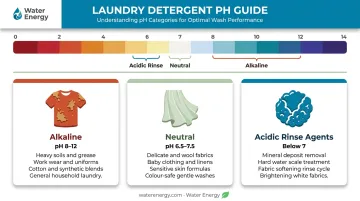
The Three pH Categories
| Category | pH Range | Best Used For |
|---|---|---|
| Alkaline detergents | 8–12 | Everyday loads, greasy soiling, heavy stains |
| Neutral detergents | 6.5–7.5 | Delicates, wool, silk, sensitive skin |
| Acidic rinse agents | Below 7 | Neutralizing alkaline residue, mineral deposits |
Product labels don't always reflect the actual pH. Woolite All Clothes, for example, sits at pH 7.5–8.5 — technically alkaline — despite being marketed as a gentle formula. Tide Free & Gentle measures around 7.4. Label language like "gentle," "hypoallergenic," or "sensitive" doesn't guarantee neutral pH, so checking the Safety Data Sheet gives a more accurate picture than the front of the bottle.
Think of pH as a dial that controls how aggressively your wash interacts with fabric and skin. The right pH depends on what you're washing — not the lowest number you can find.
Key Advantages of Getting pH Right in Your Laundry
Managing pH isn't abstract chemistry. It produces three concrete, visible outcomes in everyday laundry — outcomes that households notice (or fail to notice when they're missing).
Advantage 1: Longer-Lasting Fabrics and Better Texture
Alkaline detergents above pH 10–12 do more than clean. For natural protein fibers, high alkalinity accelerates structural damage. A 2022 domestic washing study published in De Gruyter tested wool and silk at pH 6.0, 7.5, and 9.0 across multiple wash cycles. Both dimensional change and strength loss increased as pH rose — with knitted wool losing bursting strength noticeably at higher pH levels.
In practice, that chemistry stress shows up as:
- Towels that start feeling scratchy after several months
- Colors that dull faster than expected
- Elastics that lose their stretch
- Whites that gradually take on a yellowish tinge
The damage is cumulative and slow enough that most people attribute it to normal wear rather than wash cycle chemistry. In most cases, the laundry isn't worn out — the cleaning process is simply too aggressive for the load.
Reducing alkaline stress on fabrics, by choosing an appropriate pH level and rinsing thoroughly, preserves fiber structure. Fewer harsh chemicals clinging to fibers also means brighter colors and softer texture after washing.
Multiple Water Energy Storm users have described towels becoming noticeably fluffier after switching to a system that reduces detergent use by 70% or more, a consistent result when chemical residue drops significantly.
Advantage 2: Skin Safety and Reduced Irritation
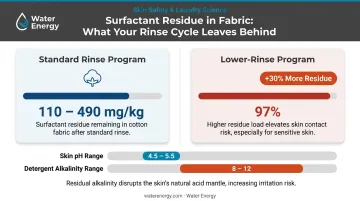
Laundry detergent residue doesn't rinse away as completely as most people assume. What stays in the fabric continues to contact skin for hours, through clothing, towels, and bedding. When that residue carries an alkaline charge, it disrupts the skin's acid mantle, the protective barrier that sits at a natural pH of 4.5–5.5.
Dermatology research places stratum corneum pH at approximately 4.5–5.57. Raising that pH, through repeated contact with alkaline residue, increases the activity of enzymes that degrade the skin barrier and slows recovery from irritation. The practical outcomes range from general dryness and tightness to redness, rash, and eczema flare-ups.
A foundational textile study measured anionic surfactant residue on cotton at 110–490 mg/kg after washing. The lower-rinse program left 30% more residue than the higher-rinse equivalent, meaning the rinse cycle matters as much as which detergent you choose.
For households dealing with recurring skin reactions, the intervention is practical: reduce the detergent load, ensure a full rinse cycle, and prioritize fragrance-free and dye-free formulas. The American Academy of Dermatology and the National Eczema Association both emphasize fragrance-free and dye-free products for reactive skin, not a specific pH target alone.
Lowering residue levels is the real lever. Shirley M. from Texas reported that her special needs grandchild, who had chronic rashes from chemical exposure, stopped breaking out entirely after switching to ozone-based washing, which sharply cuts the chemicals left in fabric.
Advantage 3: Optimized Cleaning Power for Different Stains
pH also determines which stains your detergent can actually dissolve. These work differently:
- Alkaline conditions (pH 9–11): Best for grease, oil, body soils, and protein-based stains like sweat, food, and blood
- Near-neutral conditions: Better for protecting delicate fibers while still lifting protein stains (the 2022 study found protein-stain removal was poorer at pH 6.0 than 7.5)
- Slightly acidic treatment: Effective for mineral deposits, rust, and hard water scale, and for neutralizing alkaline spots on fabric to prevent color alteration
Using the wrong pH for the load produces subpar results and often leads to re-washing. An ENERGY STAR certified washer uses approximately 14 gallons per load, compared to 20 gallons for a standard machine. Every avoidable repeat cycle repeats that water use, plus heating and drying energy. Matching detergent chemistry to soil type from the start reduces the need for second passes.
What Happens When pH Balance Is Ignored
The consequences of washing without attention to pH aren't dramatic at first — they accumulate gradually until the damage is obvious and harder to reverse.
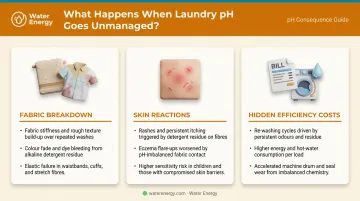
Three categories of damage build up when pH goes unmanaged:
- Fabric breakdown: Repeated high-alkaline cycles stiffen towels, reduce absorbency as residue builds in fibers, and fade colors in ways that look like normal aging. Bed linens lose softness. Elastic waistbands fail ahead of schedule.
- Unexplained skin reactions: Chronic dry skin, recurring rashes, and eczema flares are often triggered by residual detergent left in clothing and bedding. Most people blame weather, stress, or skincare products — not their laundry room. Households with young children face higher risk, as CDC data shows eczema affects 12.7% of children ages 0–17.
- Hidden efficiency costs: pH-imbalanced cycles often demand hotter water, longer run times, extra detergent, and re-washing to get acceptable results. That compounds into higher utility bills, more chemical wastewater, and faster machine wear — with no single cause easy to pin down.
How to Keep pH in Check with Every Wash
Three practical steps cover most of what households need:
1. Match detergent pH to the load type
- Neutral (pH 6.5–7.5) for wool, silk, and delicates
- Mildly alkaline (pH 8–10) for everyday loads with grease or body soils
- Check the Safety Data Sheet rather than relying on marketing language like "gentle" or "sensitive"
2. Prioritize the rinse cycle Insufficient rinsing is the leading cause of residue buildup, regardless of how good the detergent is. Use the recommended water volume, don't overload the machine (overloading reduces rinse effectiveness), and avoid overdosing detergent — more soap doesn't mean cleaner results, it means more residue.
3. Understand your water hardness Hard water contains dissolved calcium and magnesium that interfere with alkaline detergents, forming soap scum and reducing cleaning efficiency. USGS classifies water above 121 mg/L CaCO3 as hard, and hard water is common across much of the eastern-central and western US. If your water is hard, use detergents formulated with builders (sequestrants) that bind mineral ions, or consider a physical softening solution.
Reducing the Source Load
Beyond adjusting what you buy, another lever is reducing how much detergent enters the wash in the first place. Water Energy's Storm works by dissolving ozone into cold water, which handles the oxidizing work that detergents normally do — cutting detergent use by 70% or more on most loads. Because ozone reverts to ordinary oxygen after cleaning, it leaves virtually no residue in fabric fibers. That zero-residue standard is the same one NASA required when Water Energy engineered a cleaning process for the Space Shuttle Program's Solid Rocket Booster parachutes — and it translates directly to households dealing with sensitive skin or delicate fabrics.

pH management is ongoing, not a one-time fix. Watch for early signs — stiff towels, persistent odors despite washing, or recurring skin reactions — and treat them as indicators that something in the wash chemistry needs adjusting.
Frequently Asked Questions
What is the pH of a typical laundry detergent?
Most conventional laundry detergents sit between pH 8 and 12 (alkaline), since alkalinity helps break down grease and protein-based soils. Specialty or gentle formulas are often closer to neutral — pH 6.5–7.5 — though "gentle" marketing language doesn't guarantee this. Checking the product's Safety Data Sheet gives the most accurate pH value.
Can laundry detergent throw off pH?
Detergent residue remaining in fabrics after washing carries its alkaline pH into ongoing skin contact. Insufficient rinsing is the primary cause — a foundational textile study found that a lower-rinse program left 30% more surfactant residue in cotton than a higher-rinse equivalent.
What laundry detergent has a neutral pH?
Neutral-pH detergents (pH 6.5–7.5) are typically marketed as gentle, hypoallergenic, or suited for delicates. However, "gentle" claims don't confirm neutral pH — Woolite All Clothes, for example, measures 7.5–8.5. Check the manufacturer's Safety Data Sheet or product FAQ for a stated pH value before assuming label language reflects actual chemistry.
Does high-pH detergent damage clothes over time?
Yes — particularly for wool, silk, and other protein fibers. The 2022 domestic washing study found measurable strength loss and dimensional change in wool and silk as wash pH rose from 6.0 to 9.0 across repeated cycles. Cotton and synthetics are more tolerant, but repeated high-alkalinity exposure still degrades color vibrancy and texture over time.
Is pH balance in laundry important for sensitive skin?
Residual alkaline detergent disrupts the skin's natural acid mantle (pH 4.5–5.5), which can trigger dryness, rashes, and eczema flares. For children, eczema sufferers, and anyone with reactive skin, using lower-pH or neutral detergents, ensuring thorough rinsing, and reducing overall chemical use all lower the residue burden driving these reactions.
How does water hardness affect laundry pH?
Hard water contains dissolved calcium and magnesium that react with alkaline detergents, forming soap scum that reduces detergent efficiency and leaves mineral residue in fabrics. This compounds the alkalinity problem — more detergent gets used, more residue accumulates, and results suffer. Using detergents formulated with builders (sequestrants) or a physical water softening solution helps counteract this effect.