Introduction
Your washing machine can look spotless and still be a breeding ground for bacteria, mold, and detergent sludge. The drum, gaskets, and detergent drawer quietly build up gunk that clean clothes never reveal.
This matters more when someone in the house is sick, a baby's cloth diapers need washing, or that musty smell keeps coming back no matter how much detergent you use.
Here's where most people get stuck: they don't realize "washing machine cleaner" and "laundry sanitizer" aren't the same product. One cleans the appliance. The other targets pathogens on your clothes.
This guide breaks down the real difference between the two, walks through step-by-step cleaning methods, and reveals which germs sanitizers actually kill. It also introduces a chemical-free alternative that skips hot water entirely.
Key Takeaways
- Cleaning removes dirt and residue; sanitizing kills bacteria and viruses—most healthy households only need cleaning
- The EPA requires laundry sanitizers to reduce bacteria by 99.9%, while disinfectants must achieve complete kill
- Common tools include hot water, machine cleaner tablets, vinegar, and EPA-registered sanitizer additives
- Chemical sanitizers and bleach need hot water, irritate sensitive skin, and wear down fabric over time
- Ozone systems, first engineered for NASA's Space Shuttle program, sanitize in cold water with zero chemical residue
Washing Machine Cleaner vs. Sanitizer: What's the Real Difference?
Cleaning and sanitizing solve two different problems, and mixing them up leads to a false sense of security.
Cleaning removes dirt, soil, and detergent buildup. It makes your machine and clothes look and smell better. Sanitizing is specifically about reducing bacteria, viruses, and other pathogens to a measurable, regulated standard.
According to the EPA's own guidance on disinfecting, sanitizing, and cleaning, a product can only make a sanitizing or disinfecting claim if it's registered and tested to meet specific benchmarks:
- Sanitizer: Must achieve at least a 99.9% reduction in targeted bacteria
- Disinfectant: Must achieve complete kill or no measurable growth of the specified organisms
A load of laundry can smell fresh and look immaculate while still harboring biofilm, mold spores, or bacterial colonies in the machine itself. Cleaning doesn't guarantee pathogen elimination, and manufacturer claims vary widely between products, so check the label rather than assume.
Cleaning handles most routine situations, including:
- Getting rid of that lingering musty smell
- Removing detergent film and mineral buildup
- Preventing mold in the gasket and drum
Sanitizing matters in specific, higher-risk situations, such as:
- Illness in the household, particularly stomach bugs
- Cloth diapers or pet bedding
- Contaminated work clothing (think healthcare, industrial, or hazardous exposure)
Laundry sanitizers aren't needed for everyday loads or standard cold/flu exposure — they're reserved for the situations above, not a default addition to every wash. Ozone-based systems like Water Energy's Storm handle this differently, killing bacteria, viruses, and spores such as C. diff during every wash cycle, so high-risk loads get built-in sanitizing without a separate product.
How to Clean and Sanitize Your Washing Machine: Step-by-Step Methods
The right method depends on your goal. Are you maintaining the machine itself, or sanitizing a specific load of contaminated laundry? These require different approaches.
Run a Sanitize Cycle or Hot Water Wash
Many modern washers include a built-in Sanitize cycle that uses extra-hot water to target common household bacteria. If your machine doesn't have one, use the hottest water setting your fabric can tolerate.
There's no single universal minimum temperature that guarantees bacteria elimination in home laundry. The CDC's household cleaning guidance simply recommends using the warmest appropriate water setting and drying items completely, rather than citing one fixed number.
Certified sanitizing cycles (NSF Protocol P172) are instead measured by performance: a 99.9% microorganism reduction on the cycle, not a specific temperature threshold. Ozone-based systems like Water Energy's Storm meet that same performance standard using cold water, removing the guesswork around temperature settings entirely.
Clean the Machine Itself With Tablets, Powder, or Vinegar
The basic process is the same regardless of product:
- Empty the drum completely: no clothes, no leftover items
- Add your cleaning product: a tablet, powder cleaner, or 1 cup of white vinegar
- Run the hottest, longest cycle available
- Wipe down gaskets and seals by hand to remove residue the cycle missed
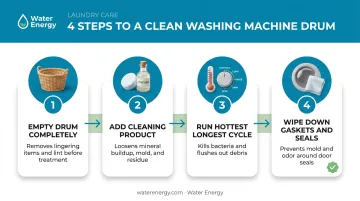
Manufacturers like Whirlpool and Maytag recommend this roughly once a month or every 30 loads. Front-load washers need more frequent gasket attention since trapped moisture around the door seal creates ideal mold conditions.
Add a Laundry Sanitizer Product to the Wash
Liquid laundry sanitizer additives go in during the rinse cycle, either through the fabric softener compartment or directly into the drum. This step sanitizes your clothing, not the machine.
A few rules matter here:
- Never mix sanitizer directly with detergent
- Follow label-specified contact time exactly
- Add during rinse, not wash, per product instructions
Skipping any of these steps can mean the product doesn't do what it claims.
What Bacteria and Viruses Do Laundry Sanitizers Actually Kill?
Laundry sanitizers aren't universal germ-killers. EPA-registered products are tested and labeled against specific organisms, most commonly:
- Staphylococcus aureus (staph)
- Klebsiella pneumoniae
- E. coli species (on some labels)
- Salmonella species (on some labels)
Effectiveness varies by brand and formulation, so always check the actual label claims rather than assuming broad protection. One EPA-registered rinse-cycle sanitizer, for example, is tested to achieve 99.9% reduction of staph and klebsiella specifically within 16 minutes at room temperature, not against every possible pathogen.
Routine cold or flu exposure generally doesn't call for a laundry sanitizer. These products are more useful for:
- Enteric illness (stomach viruses, food poisoning)
- Contaminated work clothing
- Immunocompromised household members
One tradeoff worth knowing: many chemical sanitizers leave behind residue after washing. That residue can irritate sensitive skin and, over repeated hot-water cycles, contribute to fabric wear. Ozone-based systems, like Water Energy's Storm, avoid this entirely: dissolved ozone breaks down into oxygen rather than leaving residue behind.
The Hidden Downside of Chemical Sanitizers — and a Cleaner Alternative
Chemical sanitizers and bleach get the job done, but they come with baggage most people don't think about until it's a problem.
Common drawbacks include:
- Harsh fumes during and after washing
- Skin irritation, especially for sensitive skin or eczema-prone households
- Chemical residue buildup in the machine and on fabric
- Dependence on hot water, which drives up energy costs
- Gradual fabric wear from repeated exposure to bleach and heat
Water heating alone accounts for roughly 90% of a washer's total energy use, so running hot-water sanitize cycles regularly adds up fast on utility bills.
Where Ozone Fits In
Ozone is an EPA-recognized oxidizer, and commercial laundries have relied on it for disinfection without chemical residue for decades. Water Energy has spent 25 years applying ozone technology in commercial laundry settings before bringing that experience home.
The company's Storm system runs on the Tech2Ozone process, originally engineered for NASA in the 1990s. NASA needed a way to clean Space Shuttle solid rocket booster parachutes without generating toxic wastewater.
According to NASA's own Spinoff record, engineers determined ozone was the only compound that could deliver the cleanliness NASA required without leaving chemical residue behind. That breakthrough led directly to the Tech2Ozone mass transfer process.
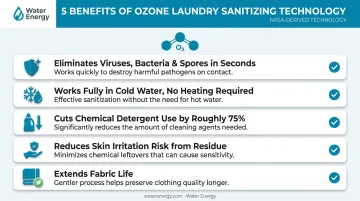
The Storm dissolves 0.8 to 1.6 parts per million of ozone directly into cold wash water. Key benefits include:
- Eliminates viruses, bacteria, and spores in seconds, including staph and C. difficile
- Works fully in cold water, no hot water needed
- Cuts chemical detergent use by roughly 75%
- Cuts skin irritation risk, since there's far less chemical residue to trigger reactions
- Helps extend fabric life by removing the hot water and harsh chemicals that wear down fibers
Once the ozone does its work, it naturally reverts back to plain oxygen. Nothing chemical lingers in the machine or on your clothes, unlike bleach or synthetic sanitizer additives that leave residue behind.
Washing Machine Maintenance Tips to Prevent Odor and Buildup
A few small habits keep your machine from turning into a mold factory between cleanings.
- Remove wet laundry promptly after each cycle, and wipe down door seals and gaskets while you're at it
- Leave the door or lid open between loads so air can circulate and moisture doesn't linger
- Set a monthly cleaning schedule using a washing machine cleaner, and reserve sanitizing methods, like an ozone-based system, for situations such as illness in the household or heavy mold growth
These three habits address the root cause behind most odor and buildup complaints. Skip them, and you're back to square one within weeks.
Frequently Asked Questions
Do laundry sanitizers really work?
Yes, when used correctly. They kill specific bacteria and viruses at the right dilution, contact time, and rinse-cycle placement. Effectiveness depends on following label instructions, and sanitizers aren't a substitute for detergent.
Which is better, OxiClean or laundry sanitizer?
They serve different purposes. OxiClean-type products are stain removers and machine cleaners meant to clean and deodorize, while laundry sanitizers are EPA-regulated products specifically formulated to kill bacteria and viruses on fabric.
What is the difference between washing machine cleaner and washing machine sanitizer?
Washing machine cleaners target the appliance itself, removing residue, mold, and odor from the drum and gaskets. Sanitizers target pathogens on your laundry or machine components, with EPA-tested kill claims.
How often should you sanitize your washing machine?
Machine cleaning should happen monthly or every 30 loads. Sanitizing is only necessary after illness, contamination, or persistent odor issues that regular cleaning doesn't resolve.
Can vinegar sanitize a washing machine, or does it just clean it?
Vinegar is effective for cleaning, breaking down mineral deposits and residue in the drum and gaskets. It isn't an EPA-registered sanitizer, so it shouldn't be relied on to disinfect contaminated laundry.
What temperature is needed to sanitize laundry in a washer?
There's no single universal minimum; guidance simply recommends the warmest setting your fabric allows. Ozone-based systems like Water Energy's Storm skip this question entirely by sanitizing effectively in cold water.