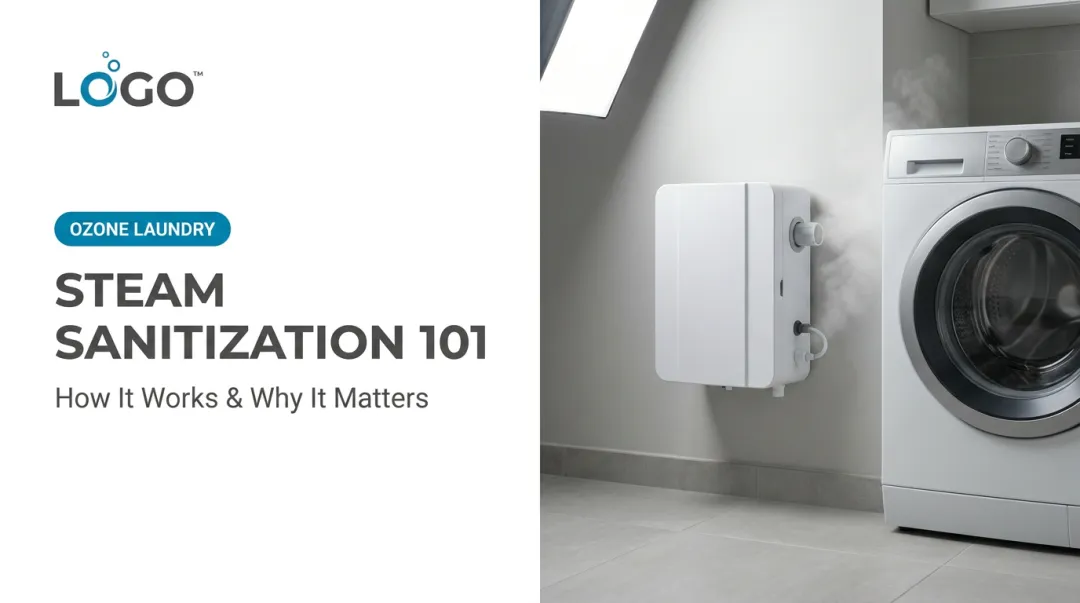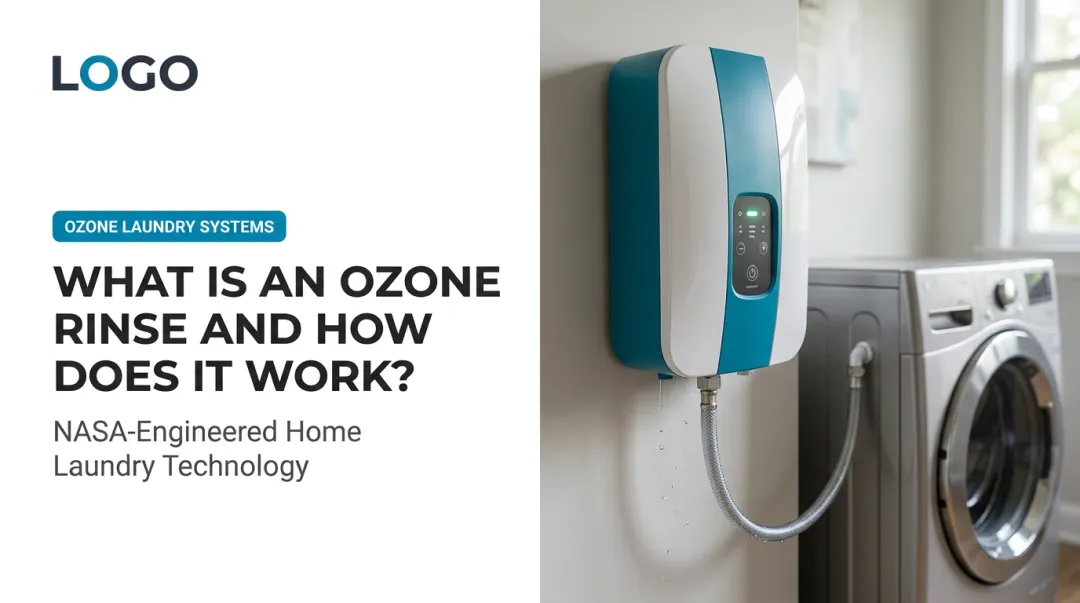
Ozone laundry systems offer a different approach: cold water, no heavy chemicals, and a disinfection method with roots in one of the most demanding cleaning challenges ever engineered — NASA's Space Shuttle Program.
This article covers how ozone laundry technology actually works, what benefits are backed by real evidence, where it falls short, and how to separate a quality system from an underperforming one.
Key Takeaways
- Dissolved O3 gas in cold water sanitizes and cleans fabrics without heat or heavy detergents.
- Verified dissolved ozone concentration (ppm) matters more than marketing claims, as many systems under-deliver.
- Expect lower utility bills, softer fabrics, reduced chemical exposure, and longer garment life.
- It won't remove grease or oil stains, and a faint odor may occur during the cycle.
What Is an Ozone Laundry System & How Does It Work?
Ozone (O3) is an unstable molecule made of three oxygen atoms instead of the usual two. That third atom makes it highly reactive: it bonds with anything nearby, oxidizing organic material like bacteria, oils, and odor compounds in the process. Once it reacts, it reverts to plain oxygen.
That reactivity is also why ambient ozone in the air gets a bad reputation. Breathing concentrated ozone gas is genuinely harmful, which is why the EPA and OSHA regulate ozone air pollution closely. But dissolved ozone in water is a different scenario entirely. The reaction happens in liquid rather than air, which is exactly why it works so well for laundry.
The Science Behind Dissolved Ozone
An ozone laundry system generates ozone gas internally, then uses a mass-transfer or injection process to dissolve that gas into the cold water line feeding the washer. This isn't the same as just pumping air into water; dissolving ozone efficiently requires precise contact chambers, pressure, and flow control.
Once dissolved, ozonated water penetrates fabric fibers and:
- Oxidizes dirt, body oils, and sweat residue
- Breaks down odor-causing bacteria on contact
- Deactivates viruses and mold spores in the wash water
- Reverts safely to oxygen once the reaction is complete
Why Ozone Concentration (PPM) Is the Real Differentiator
Here's where a lot of ozone products fall short. The EPA's disinfection benchmarking guidance measures disinfection effectiveness using CT (concentration multiplied by contact time), not a generator's advertised output rating. A machine can claim an impressive gas-production number and still fail to dissolve most of that ozone into the actual wash water.
Sidestream ozone systems illustrate why this happens: mass-transfer efficiency is designed to hit around 95%, but fouling or worn seals can drag that down below 80%. In other words, generator output and dissolved output are two different numbers, and only the second one matters for your laundry.
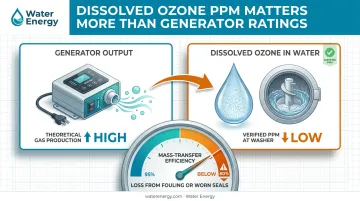
That gap is exactly what Water Energy's Storm system was engineered to close. It uses the same Tech2Ozone mass-transfer process originally engineered with NASA to clean Space Shuttle Solid Rocket Booster parachutes and recover the wash water without toxic runoff, and it delivers a verified 0.8-1.6 ppm of dissolved ozone at the washer.
Automatic flow control activates on every cycle, so there's no manual switch to remember and no guesswork about whether it's working.
Key Benefits of Washing with Ozone
The appeal of ozone laundry comes from a stack of smaller wins, not one standout feature, that add up over months of use.
Disinfection without heat. Ozone oxidizes bacterial cell walls and viral membranes directly, rather than relying on hot water and detergent surfactants to loosen contamination.
Peer-reviewed water treatment research supports ozone's strength against chlorine-resistant bacteria and spores, though independent testing on residential add-on units remains limited. The mechanism is sound, but treat aggressive percentage claims from any manufacturer with healthy skepticism.
Lower utility costs. Skipping the water heater is where the real savings show up.
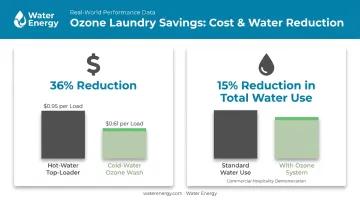
A technical brief from the American Cleaning Institute modeled per-load costs at $0.95 for a hot-water top-loader versus $0.61 for cold, nearly a 36% reduction once you factor in energy and detergent. Multiply that across a year of laundry and it adds up fast.
Fabric care that compounds over time. Without chemical residue building up in fibers, users report:
- Softer, fluffier towels
- Brighter colors that don't dull as quickly
- Less pilling on synthetic blends
- Extended garment lifespan, since heat and surfactants are the two biggest fabric killers
Odor elimination at the source. Instead of masking smells with fragrance, ozone neutralizes the bacteria producing them. That matters for households managing cloth diapers, sweaty gym gear, or skin sensitivities where fragrance itself is a trigger.
One Water Energy customer, a grandmother caring for a special-needs grandchild with reactive skin, reported that switching to ozone-washed sheets and towels stopped the itching and breakouts her grandson had dealt with for years.
Lower environmental impact. Cold-water washing cuts the energy draw and lowers detergent use, which means less chemical discharge into wastewater.
A commercial demonstration by DOE's Pacific Northwest National Laboratory found roughly a 15% reduction in total water use after ozone implementation in a multi-load hospitality setting. That's a meaningful signal, though residential per-load water savings still need individual verification on your own washer.
Are Ozone Laundry Systems Any Good? Pros, Limitations & Safety
Long-term users consistently point to the same real-world advantages:
- Installation that takes under an hour, no plumber required
- Zero ongoing maintenance: nothing to refill, clean, or replace
- No switch to remember flipping; the system activates automatically with water flow
- Noticeably shorter drying times, since there's less chemical residue holding moisture in fabric
That said, ozone has clear limits worth knowing before you buy.
Grease and oil: Ozone is an oxidizer, not a solvent, so it won't touch nonpolar stains. Motor oil, cooking grease, and clay still need pre-treatment or a small amount of detergent.
Fading: Possible but uncommon. Certain water chemistries can interact with ozone in ways that affect non-colorfast dyes. Test a low-value item first if you're washing anything you'd be upset to see fade.
Safety: Concerns usually confuse gas with dissolved water. OSHA's 0.1 ppm limit applies to breathing ozone gas over an 8-hour workday, a different exposure scenario than dissolved ozone in wash water. That dissolved ozone reverts to oxygen quickly and is already FDA-approved for food-processing applications in both gaseous and aqueous form.
A faint "clean rainstorm" smell near the washer during the cycle is normal and dissipates within minutes. If you have heightened chemical sensitivity, just make sure the laundry room has decent ventilation.
Residential vs. Light Commercial Ozone Systems: Which Do You Need?
Commercial laundries (hotels, hospitals, nursing homes) have relied on ozone for hygiene compliance since the early 1990s, when EPRI documented its first widespread installations. That's three decades of institutional use. Residential systems are the newer arrival, adapting the same core science for home washers.
The differences that actually matter when choosing between them:
| Factor | Commercial-Grade | Residential/Light Commercial |
|---|---|---|
| Sizing & installation | Professional sizing required | Plug-and-play, DIY-friendly |
| Output complexity | High-volume, industrial engineering | Compact, consistent ppm output |
| Best fit | High-volume institutional laundry | Families, pet owners, hunters, small operations |
If you're not running a laundromat or hospital, a residential/light commercial hybrid unit gives you commercial-grade disinfection logic without industrial-scale complexity. This fits:
- Families with allergies or sensitive skin needs
- Pet owners and hunters needing odor elimination
- Small operations without industrial-scale volume
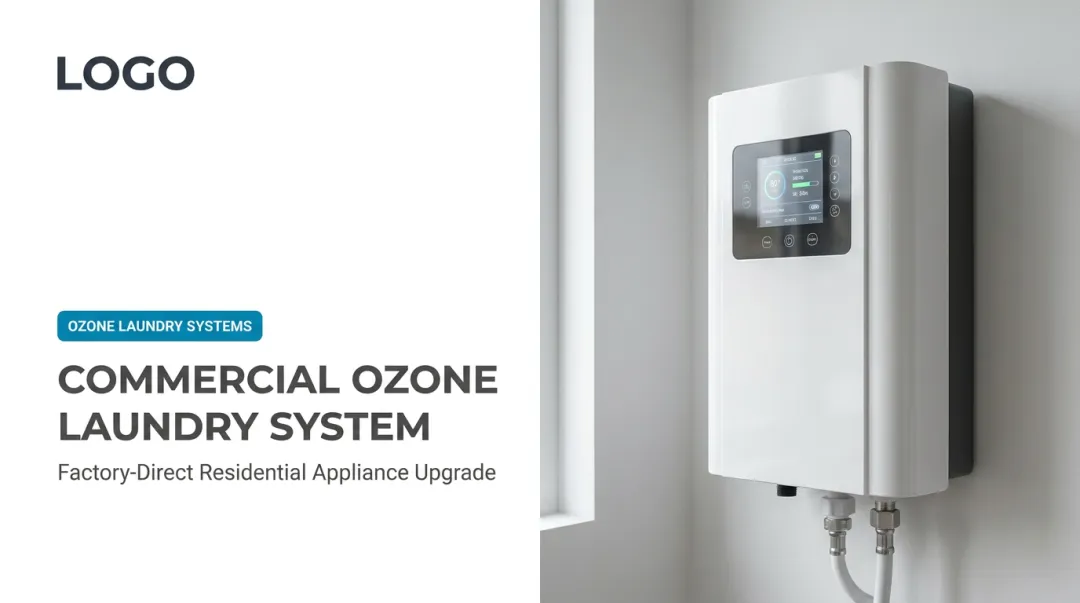
The Storm fills that gap: commercial ozone engineering in a wall-mounted unit that connects to standard washers.
How to Choose the Right Ozone Laundry System
Not every ozone product on the market delivers what it promises. Before buying, run through this checklist.
- Demand verified dissolved ozone concentration, not just generator ratings. Ask for the ppm measured at the washer inlet, not the theoretical gas output. This is the single biggest differentiator in the industry.
- Check installation requirements. A quality system should work with a standard outlet and standard water lines — no plumbing modifications, no electrician needed.
- Confirm automatic operation. The system should activate and deactivate on its own with water flow, with zero risk of forgetting to turn it on.
- Look for certifications and manufacturer track record. CE RoHS and ISO 9001:2015 confirm manufacturing quality, but neither verifies dissolved ozone output directly. A manufacturer with decades of commercial laundry experience is a safer bet than an untested entrant.
- Review warranty length and expected component lifespan. A full warranty backing the ozone-generating component signals the manufacturer stands behind long-term performance, not just the initial sale.
The Storm Deluxe and Storm OPL Deluxe meet each of these benchmarks, backed by a full one-year warranty on the ozone-generating component.
Skipping any of these steps is how buyers end up with an underperforming unit that looks fine on the spec sheet but doesn't deliver measurable results in the wash.
Frequently Asked Questions
Are ozone machines any good?
Quality ozone laundry systems are effective for disinfection, odor removal, and chemical reduction, but only when they deliver verified dissolved ozone concentration, typically in the 0.8-1.6 ppm range. They're not a substitute for pre-treating grease or oil stains.
How does an ozone washing machine work?
The system generates ozone gas internally, then dissolves it into the cold water supply line through a mass-transfer or injection process. The ozonated water flows into the wash cycle automatically, with no manual activation needed.
Is ozone laundry safe to breathe?
Dissolved ozone in water is not the same as breathing concentrated ambient ozone gas — it reverts to oxygen quickly after use. A faint smell during the wash cycle is normal and not harmful for most users.
Do you still need detergent with an ozone laundry system?
Detergent use drops dramatically for most loads, and many users eliminate it entirely for everyday washing. A small amount still helps with tough grease or oil-based stains.
Can ozone fade colored clothes?
Fading is uncommon but can happen with certain water chemistries or non-colorfast fabrics. Testing a low-value item first is the safest way to check before washing anything you care about.
How long does an ozone laundry system last?
Lifespan depends on build quality and the ozone-generating component's durability, which varies by manufacturer. A full warranty and a manufacturer with 25+ years in commercial ozone laundry are the best indicators of long-term reliability.